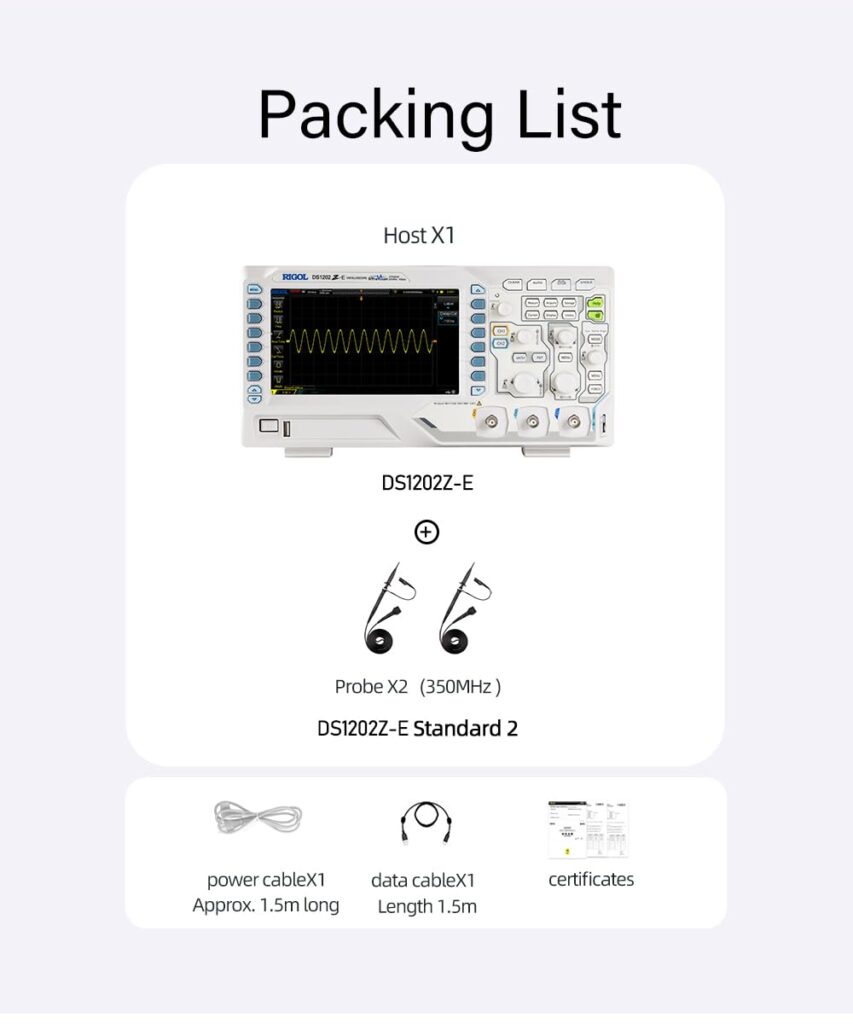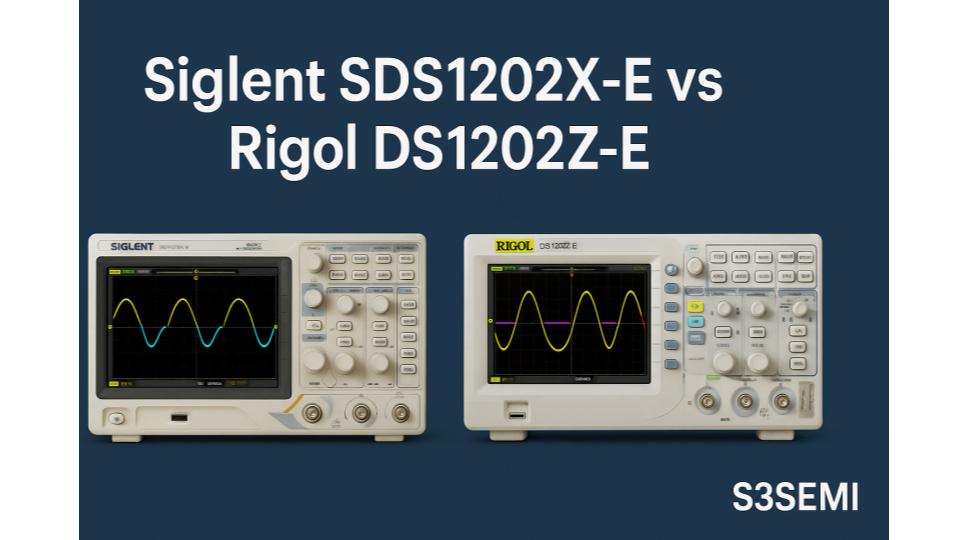
The Siglent SDS1202X-E and Rigol DS1202Z-E are two of the most popular 200 MHz, 1 GSa/s, 2-channel digital oscilloscopes for hobbyists, makers, and professional engineers. Both offer deep memory, serial decoding, and bright 7-inch displays.
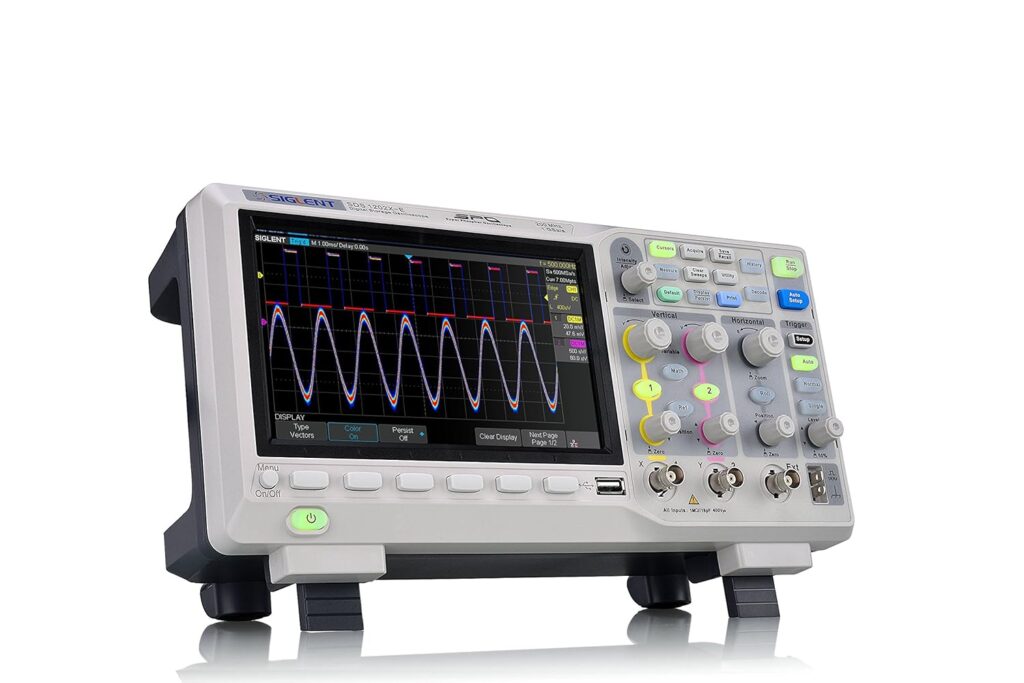
⚡ Quick Pick: Siglent SDS1202X-E vs Rigol DS1202Z-E
Choose the Siglent SDS1202X-E if you want the stronger overall oscilloscope with faster waveform capture, deeper analysis features, better FFT performance, and a more modern interface.
Choose the Rigol DS1202Z-E if you want a reliable, lower-cost 200 MHz oscilloscope for general bench work, education, hobby electronics, and basic troubleshooting.
🏆 Best Overall: Siglent SDS1202X-E
The SDS1202X-E is the better pick for users who want more advanced debugging capability. It offers strong signal analysis, excellent waveform update performance, a responsive interface, and features that make it well suited for embedded, digital, and mixed-signal troubleshooting.
💰 Best Budget Pick: Rigol DS1202Z-E
The DS1202Z-E is a dependable entry-level 200 MHz digital oscilloscope. It is a good choice if you need a capable scope for everyday electronics testing but do not need the extra analysis tools and performance advantages of the Siglent.
Bottom line: Buy the Siglent SDS1202X-E if you want the better all-around 200 MHz oscilloscope for serious debugging and analysis. Buy the Rigol DS1202Z-E if you want a solid, affordable scope for general electronics work.
Even though they look similar on paper, these two scopes feel very different in real-world use:
- Siglent SDS1202X-E emphasizes speed, responsiveness, and advanced math/FFT tools.
- Rigol DS1202Z-E emphasizes memory depth, waveform recording, and the familiar UltraVision interface.
📊 Key specs side by side
| Feature | Siglent SDS1202X-E | Rigol DS1202Z-E |
|---|---|---|
| Bandwidth | 200 MHz | 200 MHz |
| Channels | 2 analog + EXT | 2 analog + EXT |
| Max sample rate | 1 GSa/s | 1 GSa/s |
| Memory depth | 14 Mpts | 24 Mpts |
| Waveform update rate | Up to 100k wfms/s (400k in sequence mode) | Up to ~30k wfms/s |
| Minimum vertical scale | 500 µV/div | 500 µV/div |
| Display | 7″ 800×480 | 7″ 800×480 |
| Serial decode | Standard: I²C, SPI, UART, RS-232, CAN, LIN | Included bundle: I²C, SPI, UART, RS-232, others depending on package |
| FFT length | Up to 1 Mpt | Up to 16 kpts |
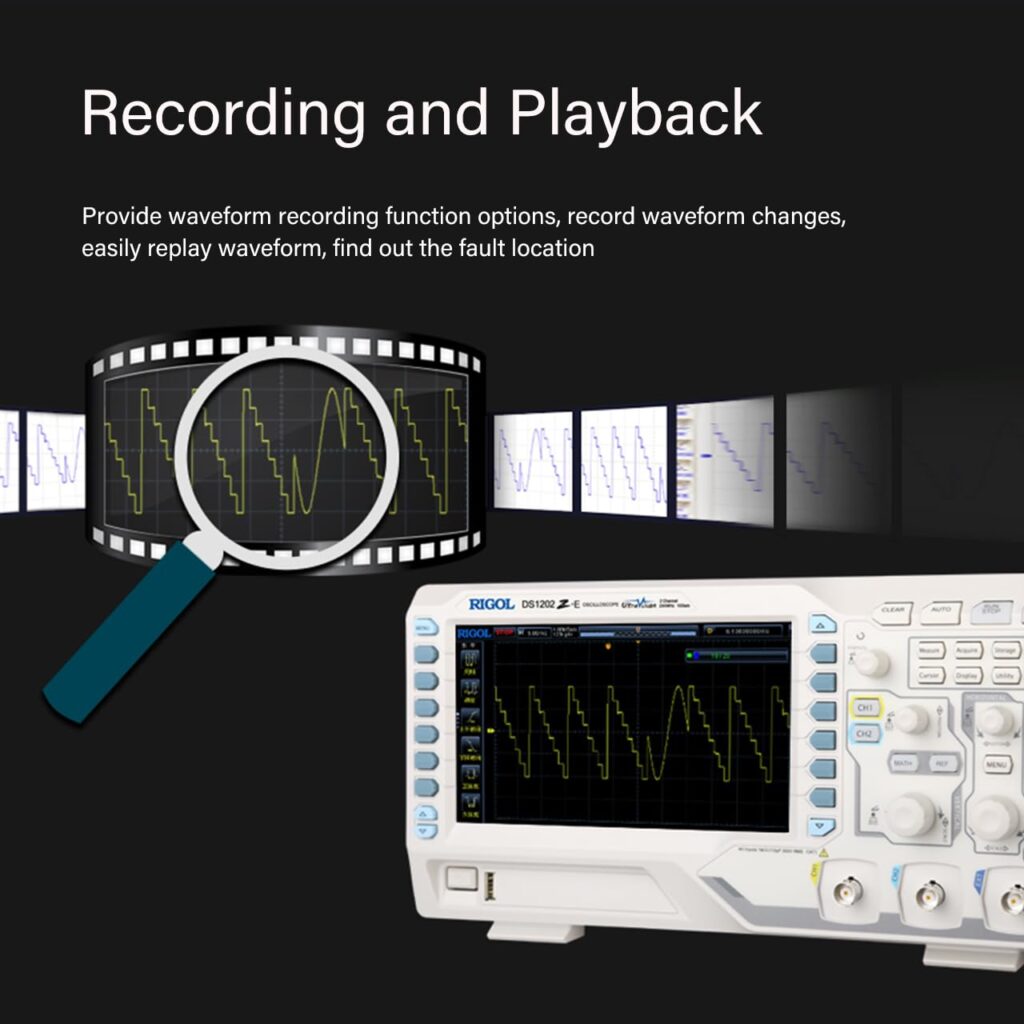
| Record length | ~80k frames in history mode | Up to 60k frames with UltraVision |
| 💳 Pricing | 💲 Check Price | 💲 Check Price |
Short version:
Rigol wins on memory and long recordings.
Siglent wins on speed, responsiveness, and FFT capability.
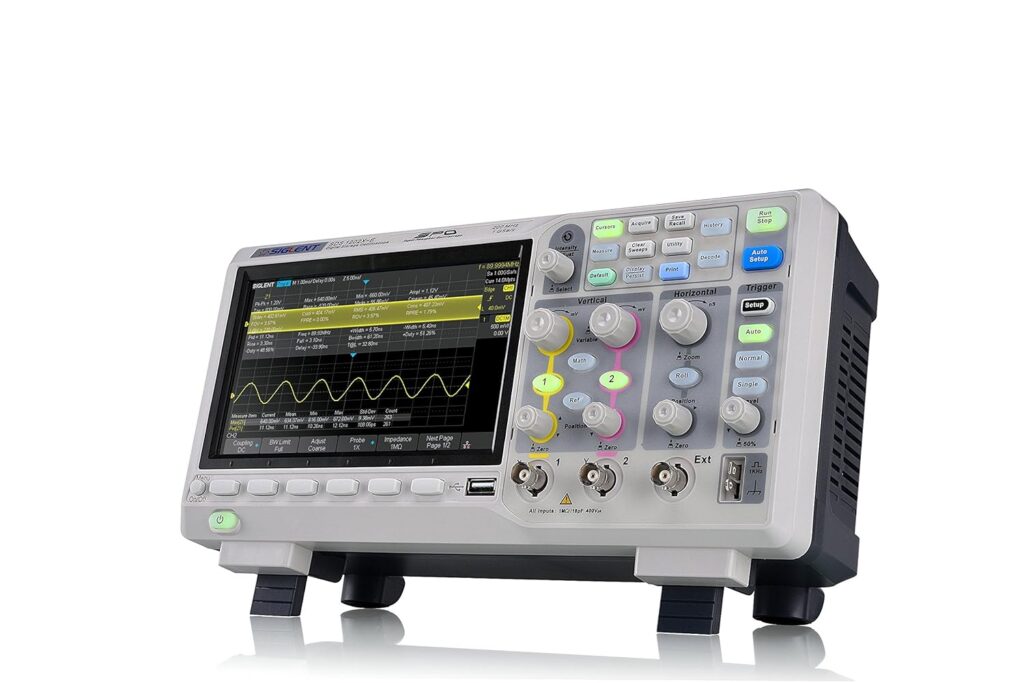
Why choose the Siglent SDS1202X-E?
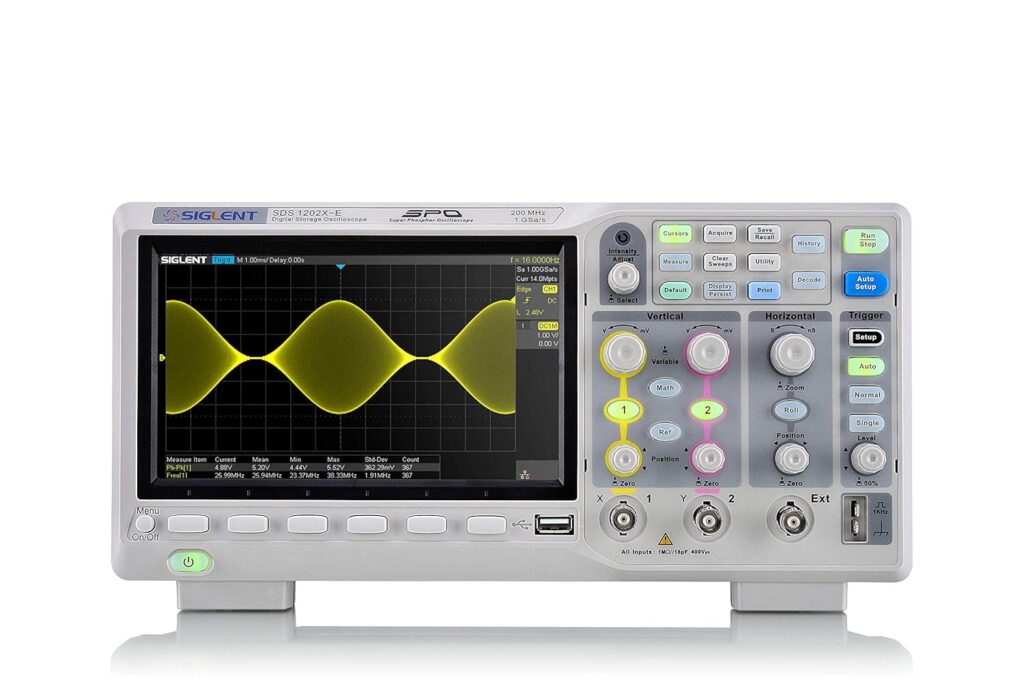
Much faster update rate
Siglent’s SPO engine is extremely fast, making glitches, noise bursts, and rare events much easier to spot. The display feels more “analog-like,” with smooth intensity-graded rendering.
Excellent FFT and math capability
A 1-Mpoint FFT is a major advantage for:
- SMPS/switch-node analysis
- Audio and analog circuits
- Basic EMI troubleshooting
- Frequency-domain troubleshooting
The Rigol’s FFT is usable, but nowhere near as detailed.
Fully unlocked serial decode
All major protocols (I²C, SPI, UART, RS-232, CAN, LIN) come standard — no license keys, no activation.
Clean, modern UI
The Siglent UI tends to be faster and more intuitive, with less lag during measurements and cursor adjustments. Many users prefer the workflow and the lower display noise.
Why choose the Rigol DS1202Z-E?
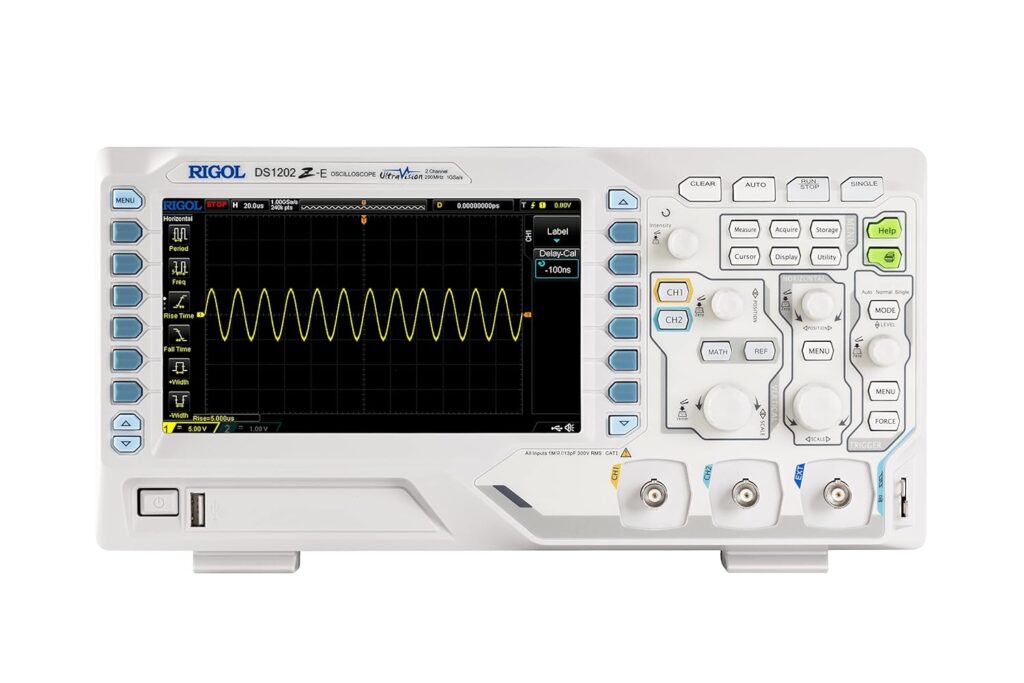
Deeper memory
With 24 Mpts per channel, the Rigol is ideal if you:
- Capture long serial frames
- Log long mixed-signal events
- Need high resolution while zooming into long captures
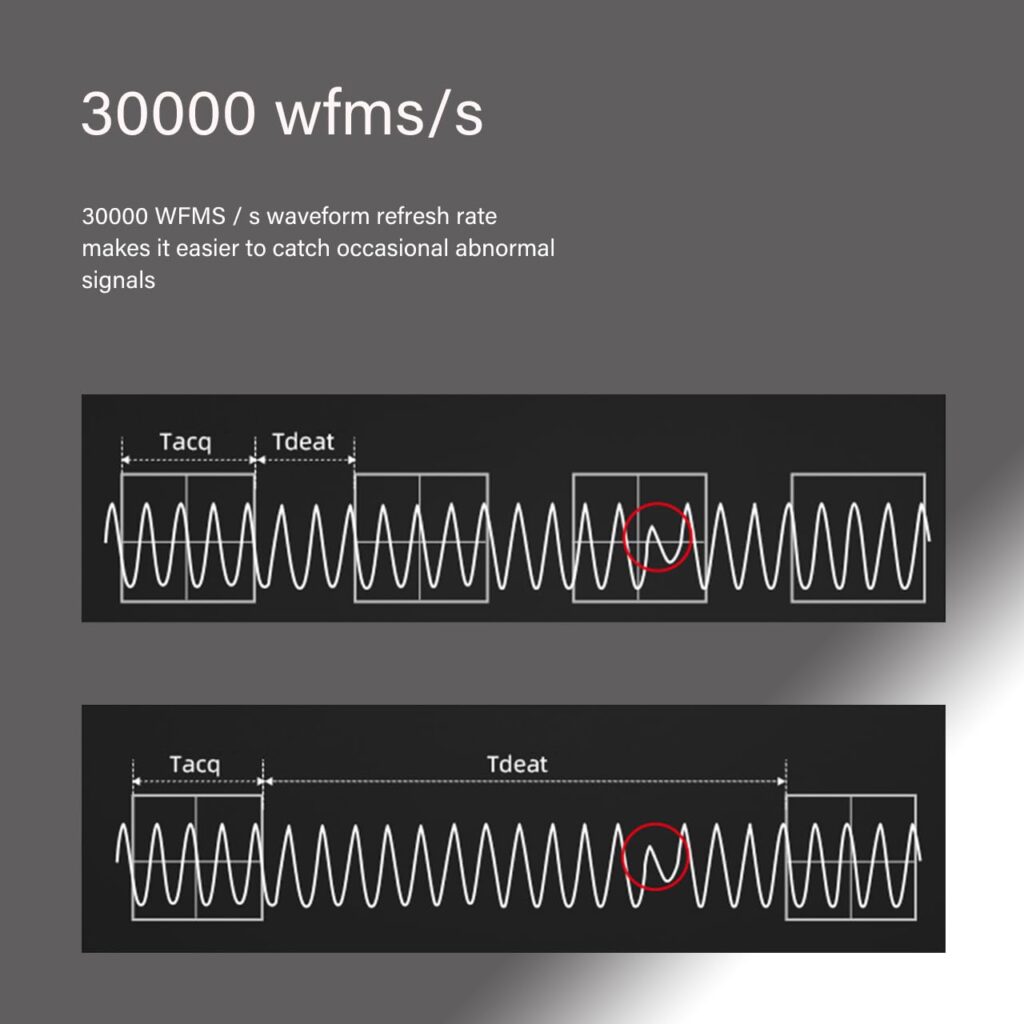
UltraVision record and playback
Rigol’s record mode (up to 60k frames) is extremely helpful for hunting intermittent issues. You can scroll through history and isolate rare anomalies.
Familiar platform for labs and education
Rigol’s DS1000Z platform is widely used, so tutorials, screenshots, and example workflows are abundant.
Strong bundled options
Most DS1202Z-E units come with the full options bundle activated, including advanced triggers and protocol decode.
🌐 Real-world comparison
Embedded debugging
- Siglent is better for spotting glitches thanks to its much higher update rate.
- Rigol is better for long I²C/SPI captures due to deeper memory.
Power electronics
- Siglent offers a better FFT and faster waveform refresh, very handy for SMPS ripple, ringing, and EMI signatures.
Analog & audio work
Both reach 500 µV/div, but Siglent’s lower noise floor and cleaner UI make it the more comfortable choice for low-level signals.
Hunting intermittent faults
- Rigol wins if you rely heavily on long record/playback sequences.
- Siglent counters with strong sequence mode and high capture rates, just with shorter memory depth.
💰 Value and pricing
Both scopes are extremely competitive and typically fall in the same price range. Since their cost is similar, the choice comes down to workflow preferences and the type of work you do.
✅ Final recommendation
Choose Siglent SDS1202X-E if you want:
- The fastest display and glitch-catching performance
- Powerful math and FFT tools
- Low noise and a modern, responsive interface
- Fully unlocked serial decode without add-ons
Choose Rigol DS1202Z-E if you want:
- Maximum memory depth for long captures
- Strong record/playback features
- A familiar interface used widely in labs and tutorials
- Deep protocol captures for long embedded sessions