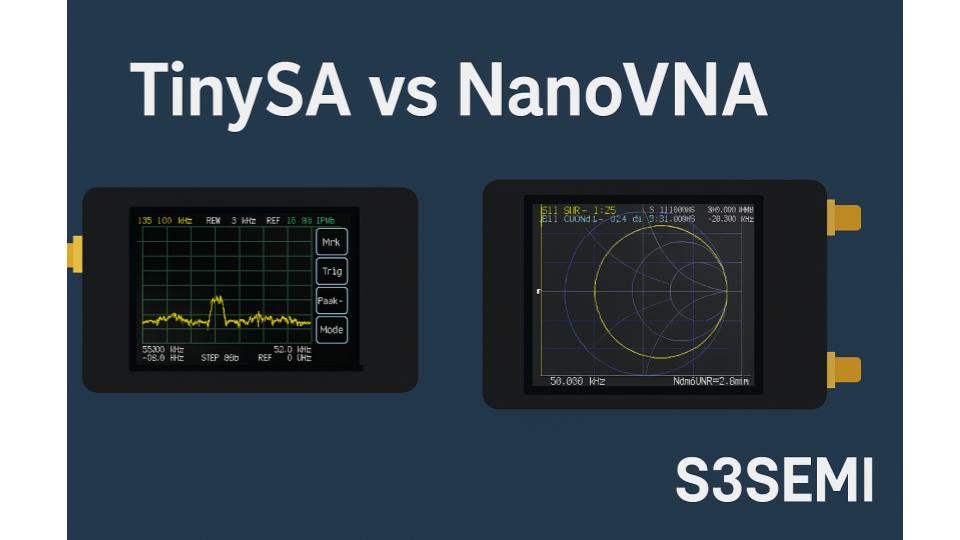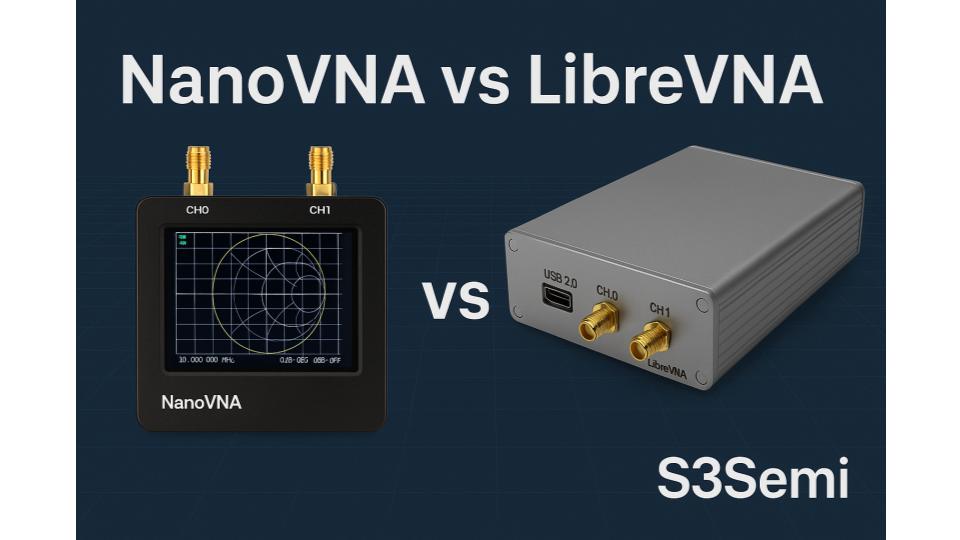
The NanoVNA changed the RF hobby world forever – an affordable, handheld Vector Network Analyzer (VNA) that could do the work of lab instruments costing thousands. But now, a new contender has emerged – the LibreVNA, an open-source, higher-performance alternative with impressive accuracy and frequency range.

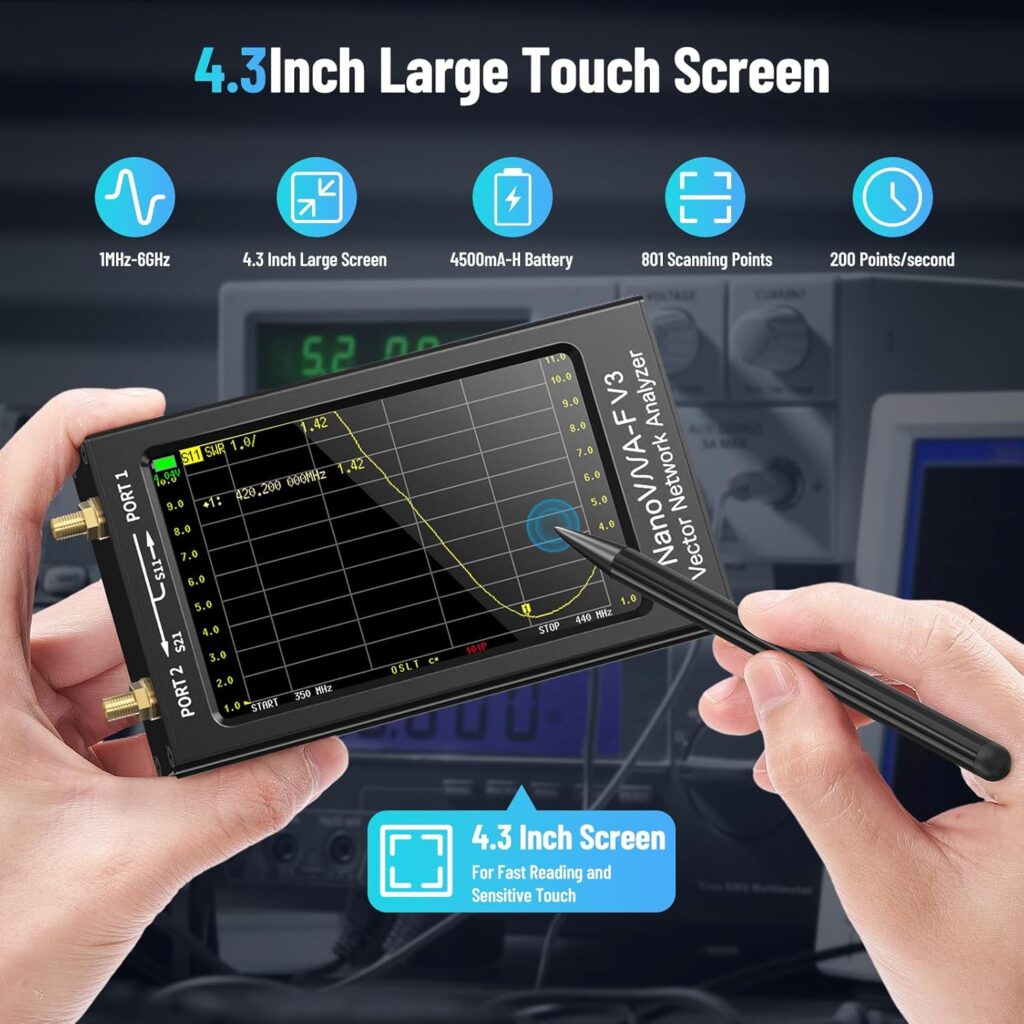
The practical choice for radio hobbyists, students and field technicians who need an affordable, self-contained analyzer for antennas, cables and basic RF components.
- Built-in 4-inch touchscreen display
- Battery-powered for portable measurements
- Measures reflection and transmission parameters
- Well suited to antenna tuning and SWR testing
- Large user and software support community
The stronger bench instrument for engineers and advanced users who need wider frequency coverage, better dynamic range and more complete measurements of RF filters, amplifiers and components.
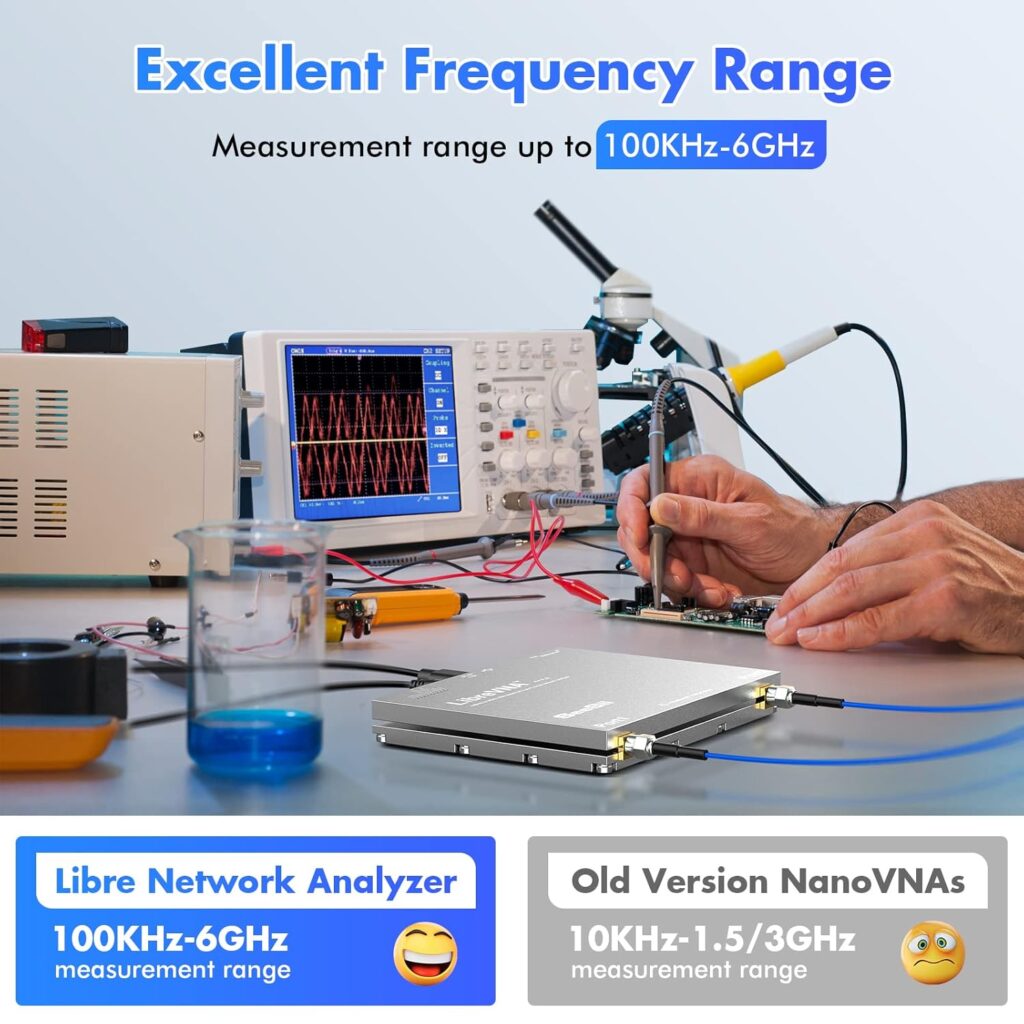
- Frequency coverage from 100 kHz to 6 GHz
- Full two-port S-parameter measurements
- Higher dynamic range than typical NanoVNA models
- Supports SOLT and TRL calibration methods
- PC control supports automation and data acquisition
Prices and availability can change. Check Amazon for current product details.
👉 Check the 6 GHz LibreVNA on Amazon
So, how do they compare? Let’s dive into what sets the NanoVNA and LibreVNA apart, and which one might be right for you.
📡 Overview
Both the NanoVNA and LibreVNA are two-port vector network analyzers, designed to measure reflection (S11) and transmission (S21) parameters across a wide frequency range. They’re invaluable for antenna tuning, filter characterization, and impedance matching – but they differ dramatically in design philosophy, frequency coverage, and measurement accuracy.
In short:
👉 The NanoVNA is affordable, compact, and great for hobbyists.
👉 The LibreVNA offers professional-grade performance and open-source transparency.
⚙️ Key Specification Comparison
| Feature | NanoVNA (V2 Plus / H4) | LibreVNA |
|---|---|---|
| Frequency Range | 50 kHz – 3 GHz (some versions up to 6.3 GHz) | 100 kHz – 6 GHz |
| Dynamic Range (S21) | ~70 dB typical | ~100 dB @ 1 GHz, ~80 dB @ 6 GHz |
| Measurement Type | S11 (reflection) and S21 (transmission) | S11 and S21, full 2-port calibrated |
| Display | Built-in touchscreen (2.8″ – 4.3″) | No display – PC-based control |
| Calibration | SOLT (Short-Open-Load-Through) | SOLT / Thru-Reflect-Line (TRL) supported |
| Output Power | −10 dBm to 0 dBm typical | Up to +5 dBm adjustable |
| Sweep Speed | ~400 points/second | ~2 000 points/second |
| PC Interface | USB-C, optional Bluetooth | USB 2.0 / USB-C (host-controlled) |
| Software | NanoVNA-Saver, NanoVNA-App | LibreVNA GUI (Windows/Linux) |
| Open Source | Hardware + Firmware | Hardware + Firmware + Calibration Files |
| 💳 Price Range (2025) | 💲 Check Price | 💲 Check Price |
| Best For | Antenna tuning, field use | Laboratory and precision RF testing |
🔍 Performance Differences
🔹 NanoVNA
The NanoVNA is designed to be small, portable, and budget-friendly. It offers surprisingly good accuracy for its price, making it the go-to tool for antenna builders, students, and hobbyists.

Pros
- Ultra-low cost and compact
- Battery powered — great for field tuning
- Color touchscreen with built-in display
- Huge software ecosystem (NanoVNA-Saver, VNA-Qt, NanoVNA-App)
Cons
- Limited dynamic range
- Calibration can drift at higher frequencies (> 2.5 GHz)
- Lower frequency stability and output power
Ideal for ham radio antennas, coax testing, and basic RF component evaluation.
🔹 LibreVNA
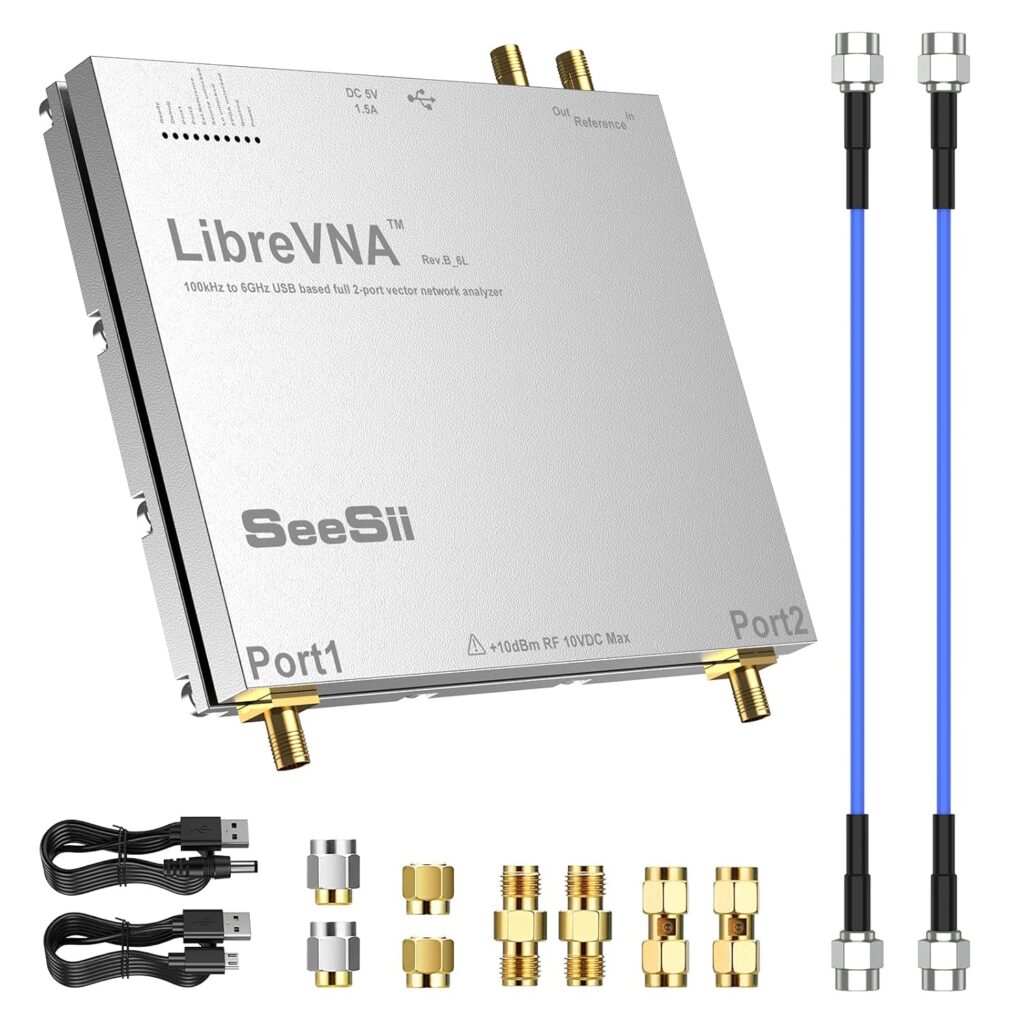
The LibreVNA is a more advanced, open-hardware VNA built for serious RF work. It offers lab-grade accuracy and higher dynamic range, rivaling instruments from Keysight or Rohde & Schwarz – at a fraction of the cost.
Pros
- 6 GHz coverage with exceptional accuracy
- Supports multiple calibration methods (SOLT, TRL)
- Fully open source — firmware and hardware schematics available
- USB-controlled, ideal for PC data acquisition and automation
- Faster sweep speed for smoother graphs
Cons
- Requires a computer (no built-in display)
- Higher cost than NanoVNA
- Less portable for field work
Perfect for professional R&D labs, filter design, and precision impedance analysis.
⚙️ Use-Case Comparison
| Application | NanoVNA | LibreVNA |
|---|---|---|
| Antenna tuning (ham/CB) | ✅ | ✅ |
| Filter characterization | ⚠️ Moderate accuracy | ✅ High accuracy |
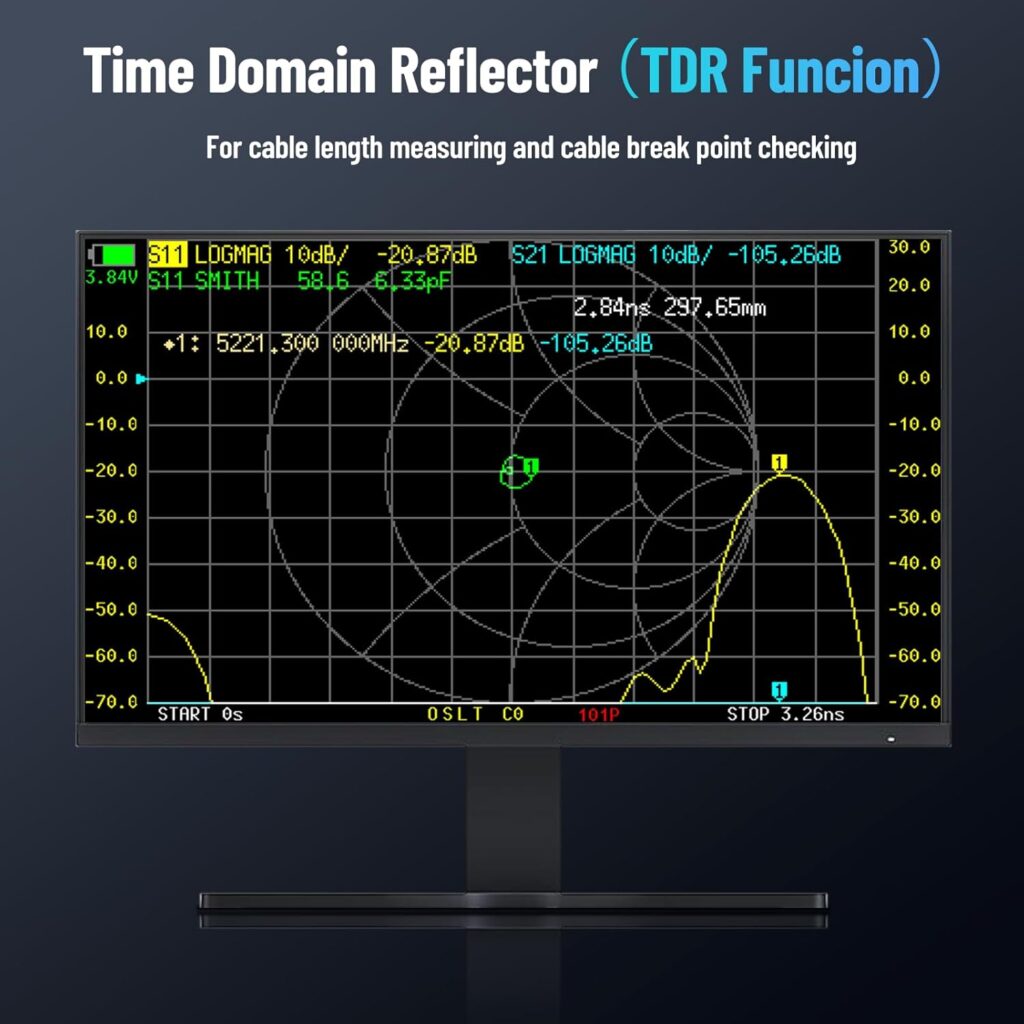
| RF cable testing | ✅ | ✅ |
| PCB / component measurement | ⚠️ Limited precision | ✅ Excellent |
| Automated measurement scripts | ❌ | ✅ via USB API |
| Field use / portable testing | ✅ | ❌ |
| Educational / beginner use | ✅ | ⚠️ Higher learning curve |
👉 Check the 6 GHz NanoVNA on Amazon
💬 Practical Takeaway
If you’re working below 3 GHz and want a portable, all-in-one analyzer, the NanoVNA is unbeatable for the price.
If you need high dynamic range, automation, and accuracy up to 6 GHz, the LibreVNA is worth every penny.
Together, they form a great pairing — the NanoVNA for field work and the LibreVNA for bench measurements.
🧭 Final Thoughts
Both analyzers are built on the same philosophy – making RF measurement accessible – but they target different audiences:
- NanoVNA: Ideal for hobbyists, ham radio users, and students.
- LibreVNA: Designed for professionals, engineers, and researchers who need precision and flexibility.
In short:
👉 The NanoVNA democratized RF testing.
👉 The LibreVNA perfected it.