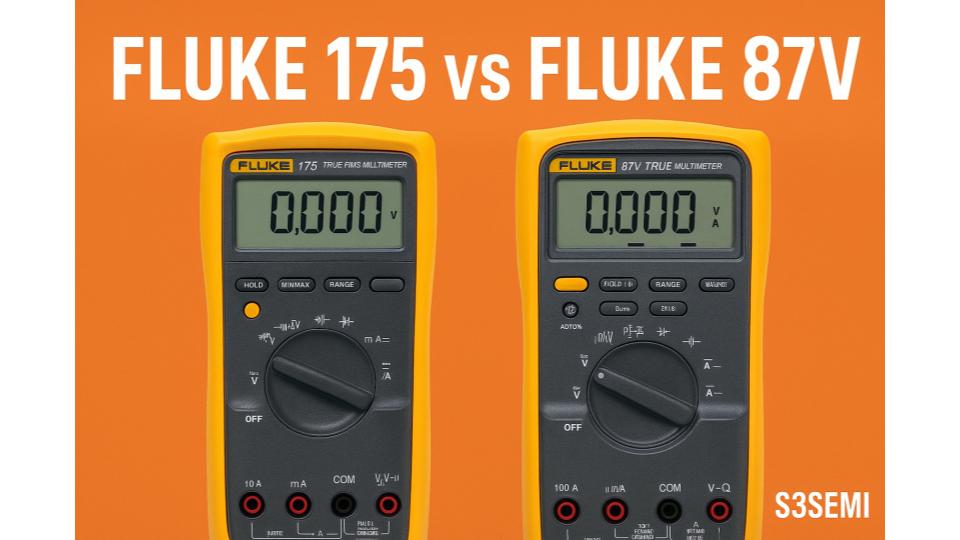
When it comes to digital multimeters, Fluke is the gold standard. Both the Fluke 175 and the Fluke 87 V are part of Fluke’s True RMS lineup, but they serve different users.

⚡ Quick Recommendation
If you’re deciding between the Fluke 175 and the Fluke 87V, here’s the short version:
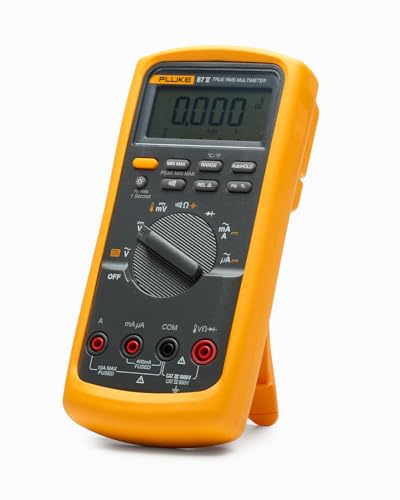
The 87V is Fluke’s legendary industrial multimeter, offering higher accuracy, a built-in thermometer, low-pass filter for motor drives, higher bandwidth, and superior troubleshooting features. It’s the best choice for industrial electricians, automation technicians, HVAC professionals, and anyone who relies on a multimeter every day.
The Fluke 175 delivers excellent True-RMS performance for general electrical work at a lower price. It’s ideal for residential electricians, maintenance technicians, students, and anyone who wants professional Fluke quality without paying for advanced industrial features.
Bottom line: Buy the Fluke 175 if you want a dependable professional multimeter for everyday electrical work. Step up to the Fluke 87V if you regularly troubleshoot industrial equipment, variable-frequency drives (VFDs), or complex electronic systems where its extra features justify the higher price.
📊 Comparison Table
| Feature | Fluke 175 | Fluke 87V |
|---|---|---|
| Voltage Range | Up to 1000 V AC/DC | Up to 1000 V AC/DC |
| Resolution | 6000 counts, 3¾ digits | 20,000 counts (high-resolution mode) |
| Accuracy (DC Voltage) | ±0.15% | ±0.05% |
| Accuracy (AC Voltage) | ±1.0% (True RMS) | ±0.7% (True RMS) |
| Current Range | Up to 10 A | Up to 10 A |
| Frequency Measurement | Yes | Yes, with higher accuracy |
| Capacitance Measurement | Yes | Yes, wider range |
| Temperature Measurement | No | Yes, built-in thermocouple support |
| Display Features | Standard LCD, no backlight | Large backlit display, analog bar graph |
| Safety Rating | CAT IV 600 V, CAT III 1000 V | CAT IV 600 V, CAT III 1000 V |
| Extra Features | MIN/MAX/AVG recording | Low-pass filter, peak capture, selectable filtering for VFDs, high resolution mode |
| Size & Weight | Compact, ~420 g | Larger, heavier, ~700 g |
| 💳 Pricing | 💲Check Price | 💲Check Price |
✅ Pros & Cons
Fluke 175

Pros
- Excellent accuracy and reliability for most professional work
- True RMS for accurate AC readings
- Wide safety ratings (CAT IV 600 V, CAT III 1000 V)
- More affordable than the 87V
- Lighter and easier to carry
Cons
- No backlight, harder to read in dim conditions
- Lower resolution (6000 counts vs 20,000)
- No temperature measurement
- Fewer advanced features for troubleshooting
Fluke 87V
Pros
- Flagship industrial multimeter with advanced accuracy
- 20,000-count high-resolution mode
- Built-in temperature measurement with thermocouple
- Low-pass filter for variable frequency drives (VFDs)
- Backlit display with analog bar graph
- Rugged build, trusted in industrial environments
Cons
- Significantly more expensive
- Larger and heavier
- Overkill if you don’t need advanced features
🏷️ Fluke Multimeter Deals ⭐⭐⭐⭐
🧭 Which Should You Choose?
- If you’re an electrician, technician, or engineer who needs a professional-grade multimeter for daily use without breaking the bank, the Fluke 175 is an excellent choice. It’s compact, reliable, and covers all the essential measurements.
- If you work in industrial environments, power systems, advanced electronics, or need the highest accuracy, the Fluke 87V is the clear winner. Its advanced features like temperature measurement, high-resolution display, and filtering for VFDs make it indispensable for complex troubleshooting.

⚡ Our Recommendation
Both the Fluke 175 and Fluke 87V are outstanding True-RMS multimeters, but they’re designed for different users.
- Choose the Fluke 175 if you want a reliable, cost-effective multimeter for everyday electrical troubleshooting and maintenance.
- Choose the Fluke 87V if you work on industrial equipment, variable frequency drives (VFDs), or complex electronic systems where its advanced measurement capabilities justify the higher price.
Bottom line: The Fluke 175 is the practical choice for most professionals, while the Fluke 87V remains the industry standard for demanding applications and is well worth the investment if you need its additional features.
💰 Fluke 175
Professional-grade True-RMS multimeter offering excellent value for electricians, maintenance technicians, and general troubleshooting.
🏆 Fluke 87V
Fluke’s flagship industrial multimeter with advanced diagnostics, higher accuracy, and features for the toughest electrical environments.
