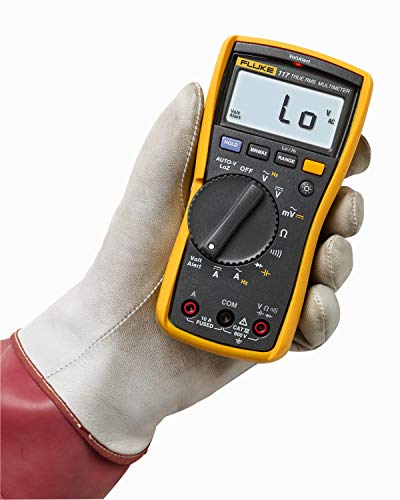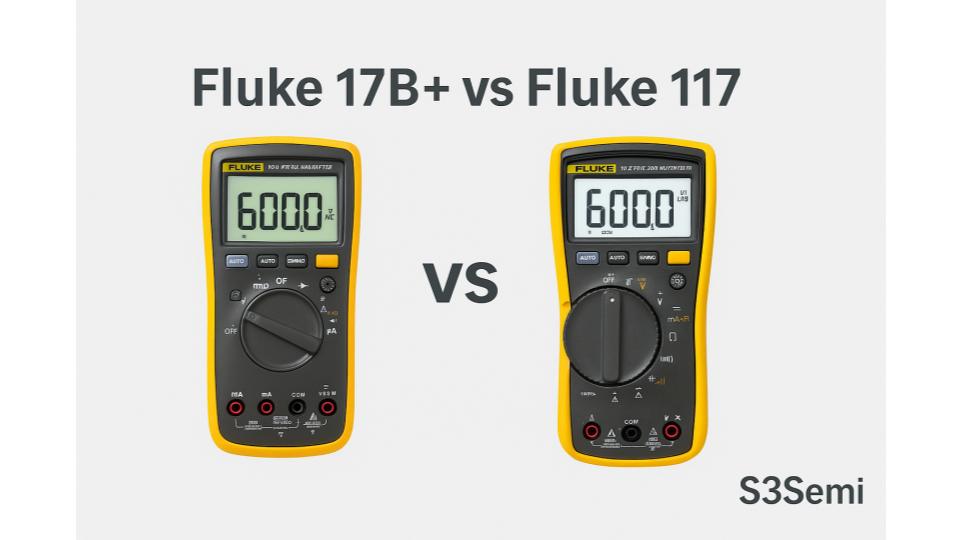
When it comes to choosing a reliable multimeter, Fluke offers multiple models tailored to different users. Two popular options are the Fluke 17B+, widely used in Asia, and the Fluke 117, designed for professional electricians.

⚡ Quick Pick: Fluke 117 vs Fluke 17B+
Choose the Fluke 117 if you’re a professional electrician who needs True RMS accuracy, non-contact voltage detection, and LoZ mode for faster, more accurate troubleshooting.
Choose the Fluke 17B+ if you want a dependable Fluke multimeter for general electrical and electronics work while keeping costs down.
🏆 Best for Professional Electricians: Fluke 117
The Fluke 117 is built for commercial and industrial electrical work. It adds premium features like VoltAlert® non-contact voltage detection, LoZ mode to eliminate ghost voltages, and True RMS measurements for accurate readings on modern electrical systems.
💰 Best Value: Fluke 17B+
The Fluke 17B+ delivers the essential measurements most technicians need—including voltage, current, resistance, capacitance, frequency, and temperature—in a rugged, easy-to-use package. It’s an excellent choice for students, hobbyists, maintenance technicians, and general electrical troubleshooting.
Bottom line: Buy the Fluke 117 if you regularly work on residential, commercial, or industrial electrical systems and want the best troubleshooting features. Buy the Fluke 17B+ if you’re looking for an affordable, reliable Fluke multimeter that covers the essentials without paying for advanced capabilities you may never use.
Both are accurate and rugged, but they have important differences that make them better suited to specific tasks.
📋 Quick Overview
- Fluke 17B+: A feature-rich meter offering True-RMS, temperature measurement, and a wide measurement range. Popular among technicians and engineers for general electrical and electronics work.
- Fluke 117: A professional-grade electrician’s multimeter with features like VoltAlert™ non-contact voltage detection, LoZ (low input impedance) to prevent ghost voltages, and faster auto-ranging.
📊 Fluke 17B+ vs Fluke 117 Comparison Table
| Feature | Fluke 17B+ | Fluke 117 |
|---|---|---|
| Display | 6000-count LCD with backlight | 6000-count LCD with backlight |
| True-RMS | Yes | Yes |
| AC/DC Voltage | Up to 1000V | Up to 600V |
| Current Measurement | Up to 10A | Up to 10A |
| Resistance | Up to 40 MΩ | Up to 40 MΩ |
| Capacitance | Up to 10,000 µF | Up to 9,999 µF |
| Frequency | Yes | Yes |
| Temperature Measurement | Yes (with probe) | No |
| 💳 Pricing | 💲Check Price | 💲Check Price |
| Continuity & Diode Test | Yes | Yes |
| Special Features | Min/Max recording, Temp probe | VoltAlert™, LoZ (Low Impedance) |
| Battery Type | 2 × AA | 9V battery |
| Size & Weight | ~455 g | ~550 g |
| CAT Rating | CAT III 600V | CAT III 600V, CAT IV 600V |
| Target User | General technicians, electronics, hobbyists | Electricians, commercial installers |
✅ Pros & Cons of Fluke 17B+

Pros
- True-RMS for accurate AC readings
- Measures up to 1000V
- Temperature measurement capability
- Excellent all-rounder for electronics and electrical work
- Affordable compared to Fluke 117
Cons
- No non-contact voltage detection
- No LoZ mode (risk of ghost voltages in some circuits)
- Slightly bulkier than entry-level meters
🏷️ Fluke Multimeter Deals ⭐⭐⭐⭐
✅ Pros & Cons of Fluke 117

Pros
- True-RMS accuracy
- VoltAlert™ non-contact voltage detection
- LoZ mode eliminates ghost readings
- Compact, ergonomic design for electricians
- CAT IV 600V safety rating for higher protection
Cons
- Lower maximum voltage (600V vs 1000V on 17B+)
- No temperature measurement
- Slightly higher price point
🛠️ Which One Should You Choose?
- Choose the Fluke 17B+ if you’re a technician, electronics engineer, or hobbyist who needs a wider measurement range and temperature readings. It’s versatile and cost-effective.
- Choose the Fluke 117 if you’re an electrician or commercial installer who works on residential or commercial wiring, and values non-contact voltage detection and LoZ safety features.
Both are excellent, but the 117 is better for electricians, while the 17B+ is better for engineers and general use.
Related Posts
- Fluke 117 vs Fluke 87V: Which Multimeter Should You Choose?
- Fluke 17B+ vs. 107: Which Multimeter Offers the Best Bang for Your Buck?