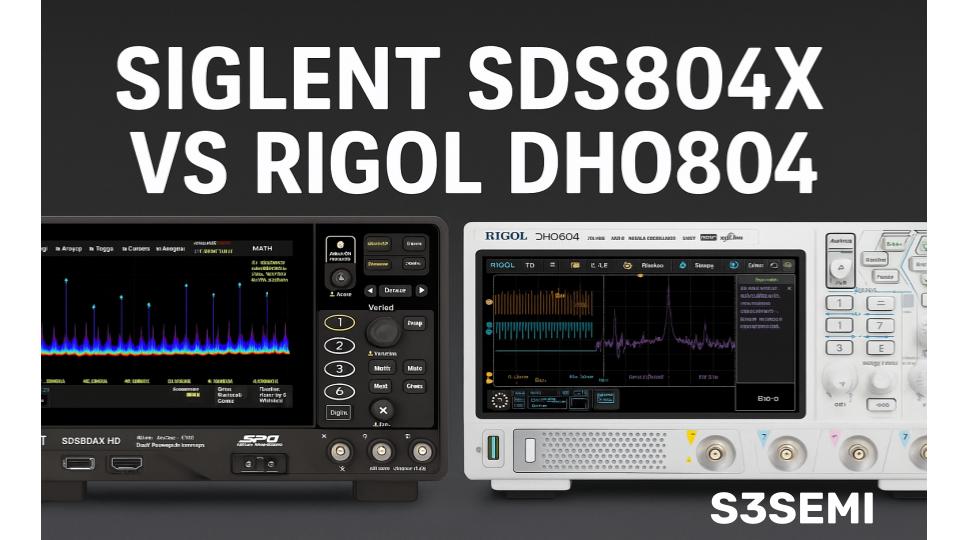
Entry-level bench scopes have become become incredibly capable, especially in the 70–100 MHz class. Two of the strongest contenders are the Siglent SDS804X and the Rigol DHO804. Both offer four channels, great FFT performance, and aggressive pricing, yet their internal architectures differ in meaningful ways.
🏷️ Oscilloscope Deals ⭐⭐⭐⭐
This guide breaks down those differences in a practical, engineering-focused way so you can choose the best scope for your bench, lab, or classroom.
🧩 Overview: What These Scopes Are Designed For
Siglent SDS804X (70 MHz)
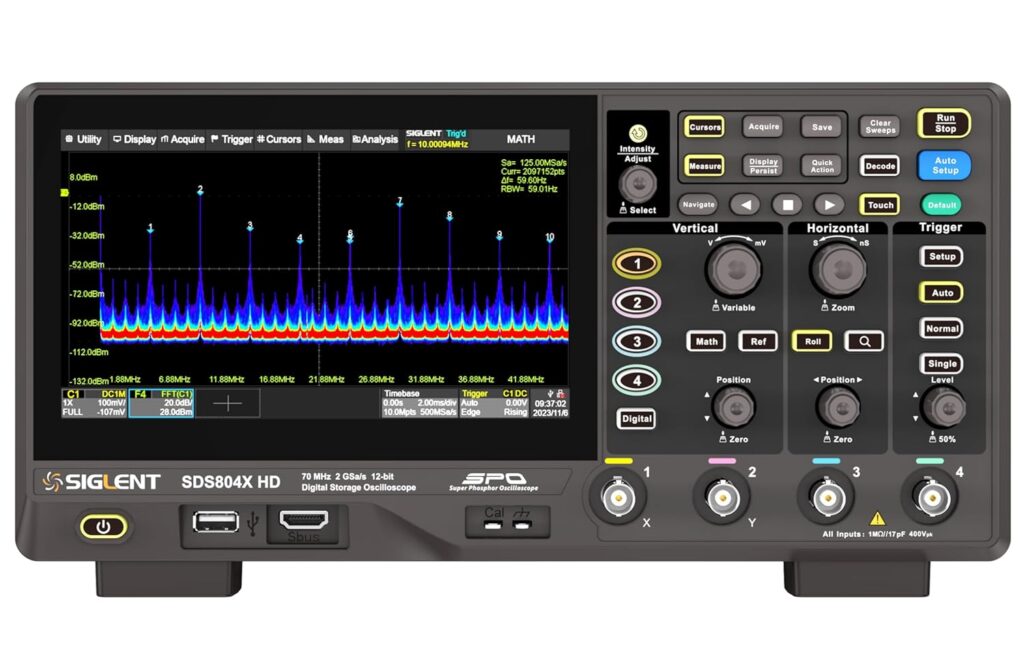
A compact version of Siglent’s popular SDS1000X-E architecture, designed for engineers who want:
- Low-noise analog performance
- Strong serial decode
- Consistent real-time responsiveness
- A mature, stable firmware platform
Rigol DHO804
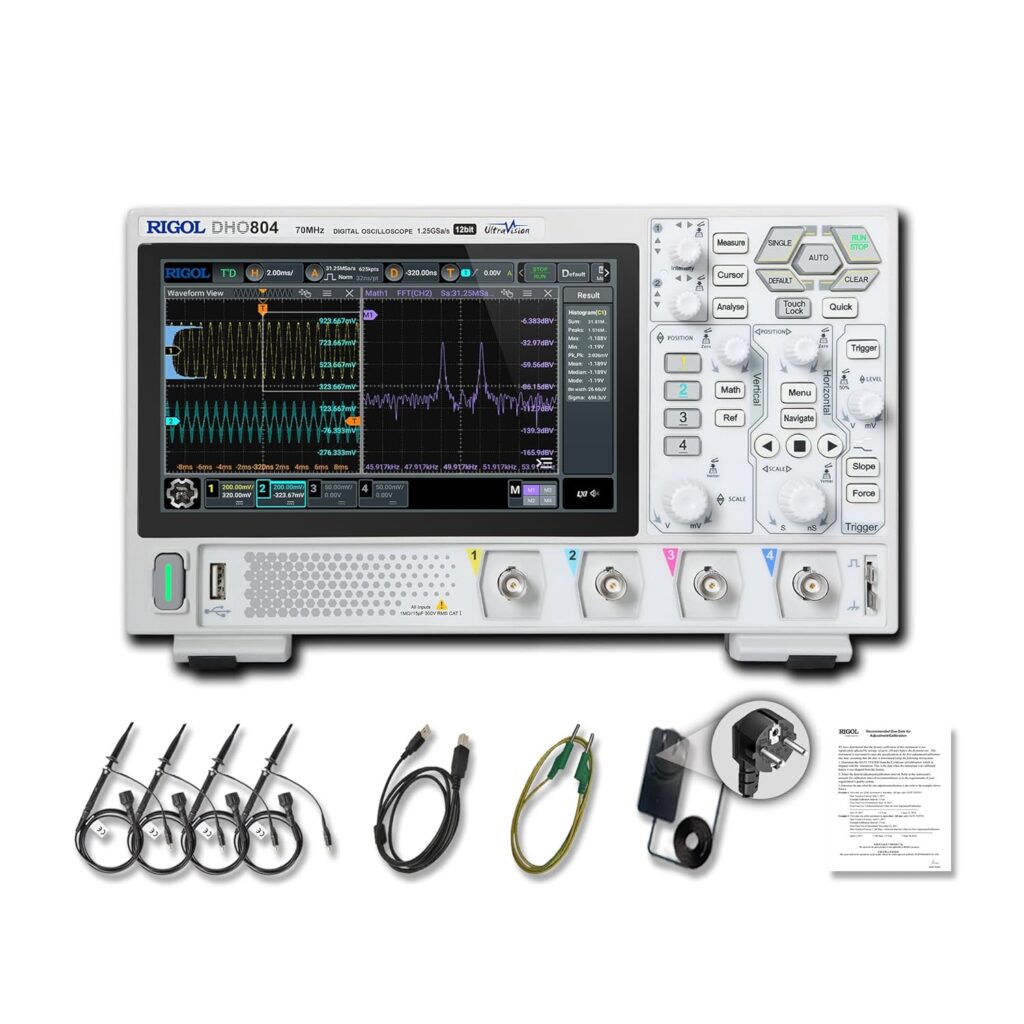
Rigol’s DHO-series brings the UltraVision III engine to an affordable scope, aimed at users who want:
- Extremely fast waveform updates
- Deep memory
- Smooth UI animations
- Strong price-to-performance
📊 Core Specification Comparison
| Feature | Siglent SDS804X | Rigol DHO804 |
|---|---|---|
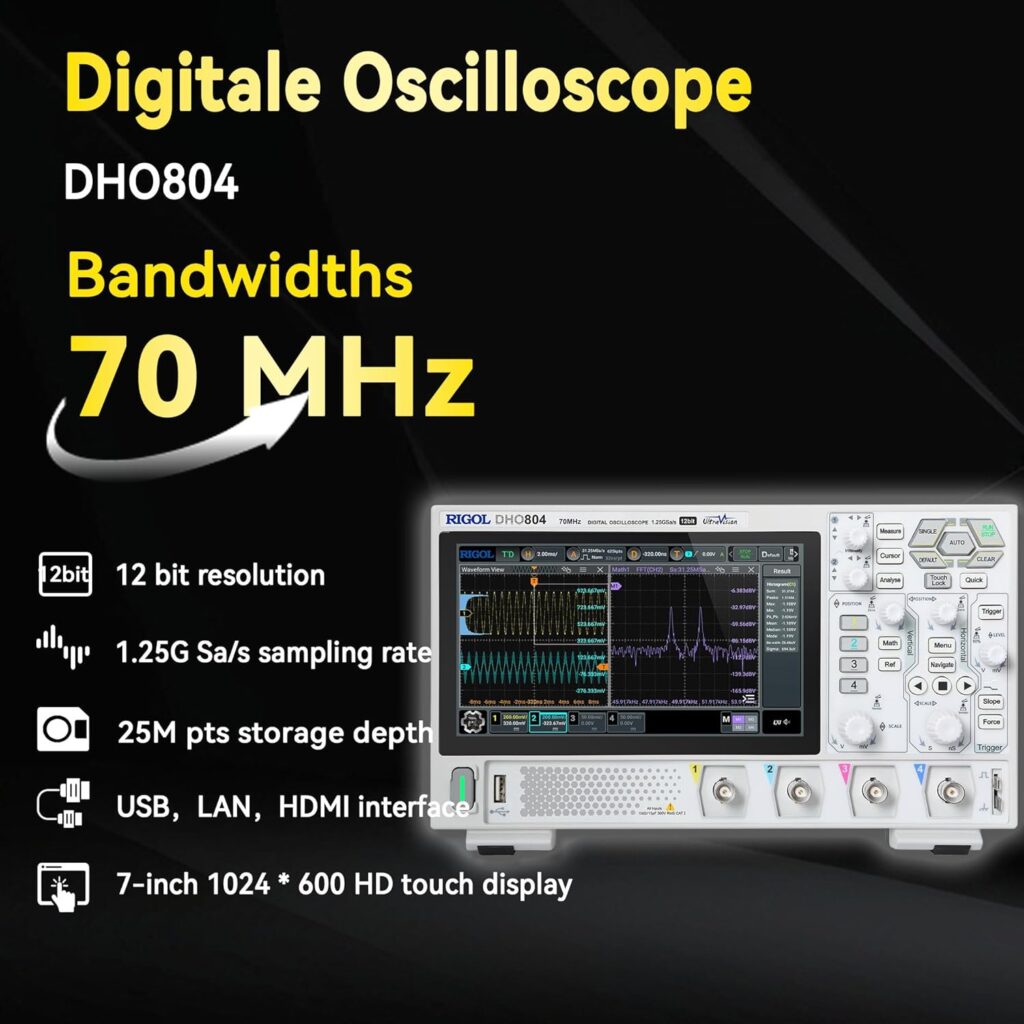
| Bandwidth | 70 MHz | 70 MHz |
| Channels | 4 | 4 |
| Sample Rate | 2 GSa/s (CH1/CH2), 1 GSa/s (4ch) | 1.25 GSa/s (all channels) |
| Memory Depth | Up to 100 Mpts | 50–100 Mpts |
| Waveform Update Rate | ~120,000 wfm/s | Up to ~500,000 wfm/s (burst) |
| FFT Performance | Hardware-accelerated | Deep FFT with UltraVision III |
| UI & Display | Clean, efficient | Modern, animation-rich |
| Serial Decode | Fast & stable | Fast but still improving via firmware |
| Noise Floor | Very low | Low, slightly higher vs Siglent |
| Typical Use Case | Analog-heavy debugging | Digital/MCU debugging |
| 💳 Pricing | 💲Check Price | 💲Check Price |
⚙️ Architecture & Signal Fidelity
Siglent SDS804X
Siglent excels in analog front-end design. The SDS804X provides:
- Lower baseline noise
- Clean signal representation
- Better performance with low-amplitude signals
Ideal for:
- RF hobby projects
- Sensor-level analog signals
- Precision waveform analysis
Rigol DHO804
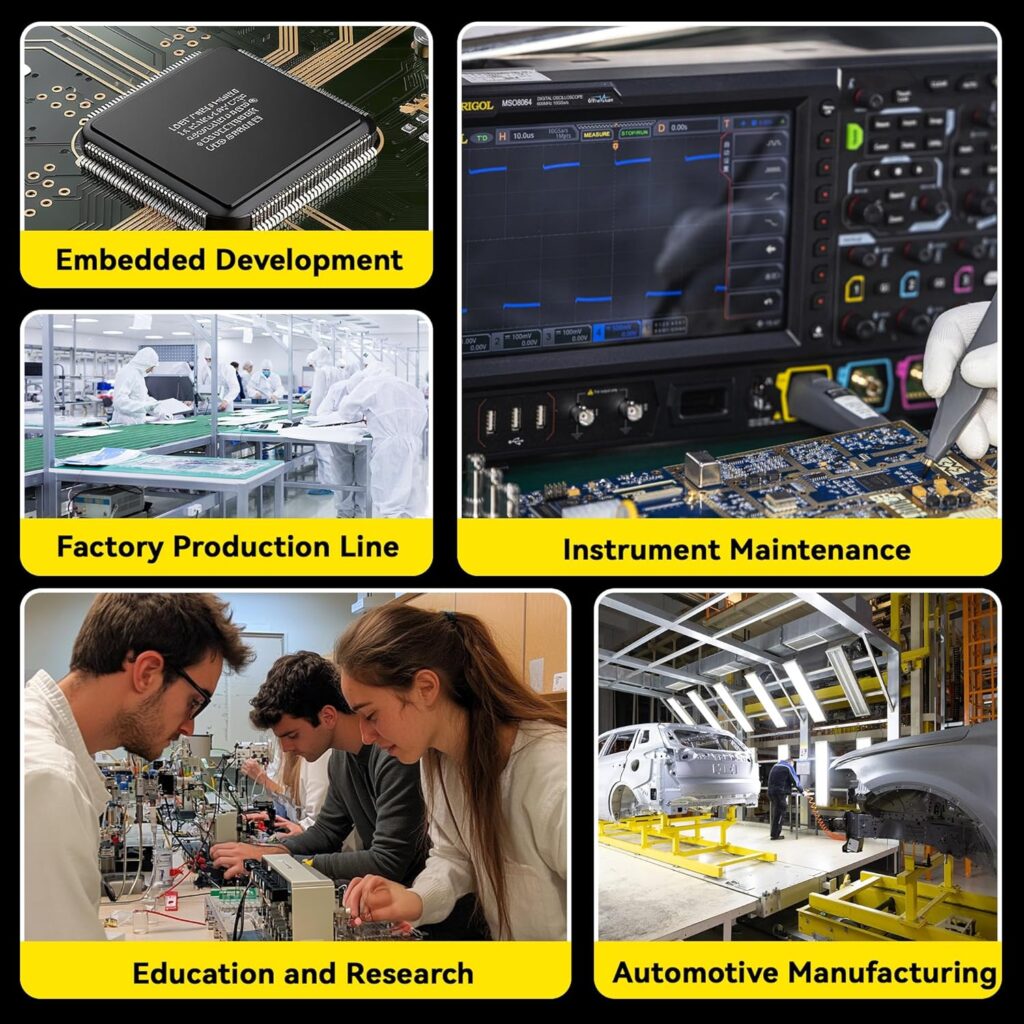
Rigol’s digital pipeline is fast and modern. While slightly noisier, it shines when capturing:
- Fast digital edges
- Pulses
- Sporadic anomalies
Best choice for:
- Microcontrollers
- Logic-heavy workflows
- IoT prototyping
🚀 Waveform Update Rate & Responsiveness
Rigol DHO804
The clear performance leader, with:
- Up to ~500k wfms/sec (burst)
- Very fast UI refresh
- Better real-time visualization for rare events
You’ll see jitter, glitches, and occasional transitions more easily.
Siglent SDS804X
Slower on paper but:
- More consistent frame pacing
- Better stability under heavy decode
- Less slowdown at deep memory
📏 Memory Depth & Long Capture Behavior
Siglent SDS804X
- Handles full memory depth gracefully
- Faster navigation through long captures
- Better performance under protocol decode + long waveform workloads
Rigol DHO804
- Offers large memory for the price
- Performs best in short to mid-length captures
- UltraVision III gives it excellent responsiveness in typical workloads
🔍 Serial Decode & Mixed-Signal Capabilities
Siglent SDS804X
- Stable serial decoding, even during long capture sessions
- Handles multiple decoders simultaneously without UI slowdown
Rigol DHO804
- Very fast decode engine
- Firmware still evolving (Rigol has been rapidly improving)
- Modern display makes interpreting signals easier
🧪 FFT & Mathematical Tools
Siglent SDS804X
- Faster, real-time FFT updates
- More stable amplitude tracking
- Better suited for small-signal frequency analysis
Rigol DHO804
- Deep FFTs thanks to memory
- Good visualization of harmonics and spectral features
Siglent is better for analog spectral work. Rigol excels at general-purpose FFT tasks.
🖥️ Display, UI & User Workflow
Siglent
- Traditional lab instrument feel
- Functional, stable menus
- No flashy animations, just task-focused efficiency
Rigol
- Modern UI, smooth animations
- Easier for beginners
- Fast navigation and clean display themes
🧰 Build Quality & Ergonomics
Siglent SDS804X
- Solid physical construction
- Quiet operation
- Professional instrument UX
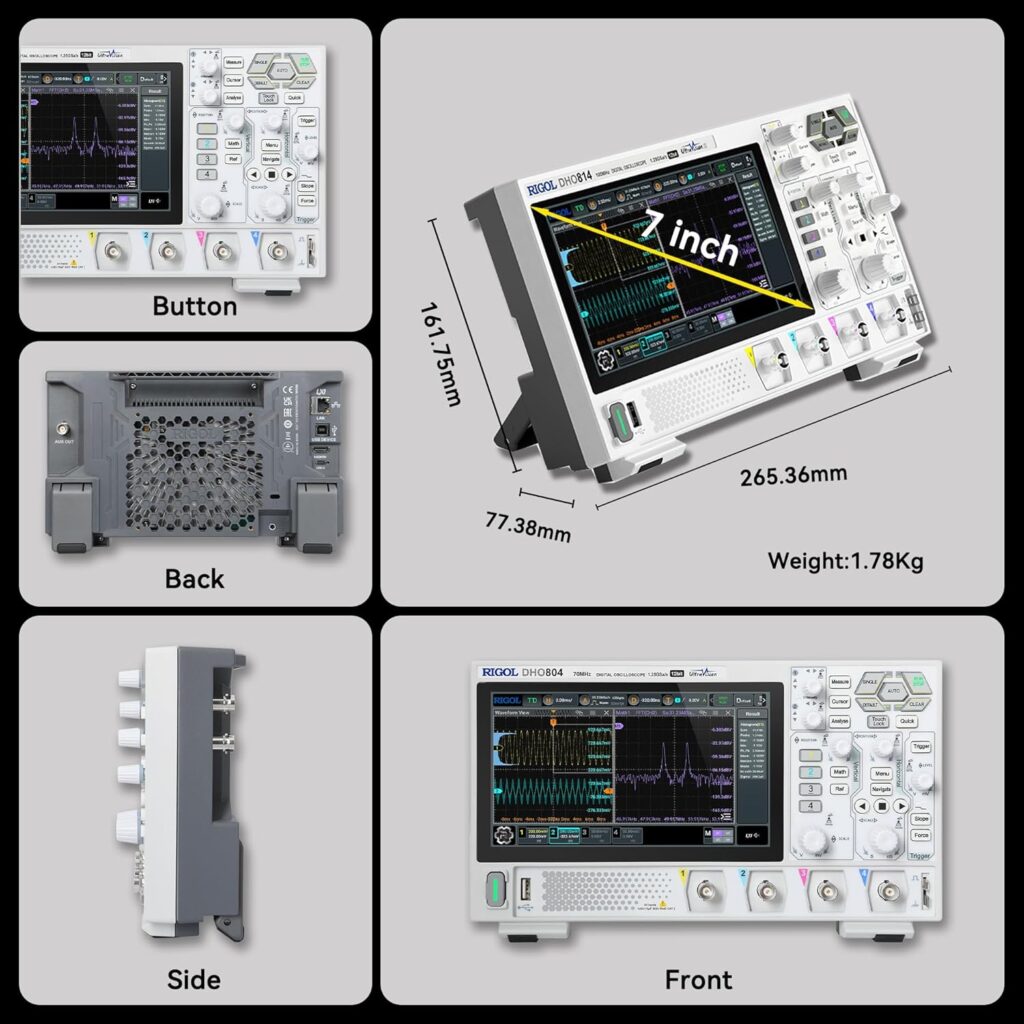
Rigol DHO804
- Lighter chassis
- Very modern look
- Clean port layout and a sleek footprint
🧩 Best For Each Type of User
Choose Siglent SDS804X if you want:
- Best analog performance
- Lowest noise floor
- Strong serial decode over long captures
- Great FFT responsiveness
- A stable professional workflow
Choose Rigol DHO804 if you want:
- Fastest waveform update rate
- Snappiest UI
- Best digital signal visualization
- Highest perceived responsiveness
- Maximum value for price
🏆 Final Verdict
The Better Scope for Analog Work
Siglent SDS804X – cleaner signals, better FFT behavior, more consistent decode.
Best for engineers working on analog, sensors, audio, RF-lite, or precision electronics.
The Better Scope for Digital & MCU Work
Rigol DHO804 – extremely fast update rate, ideal for capturing rare glitches, decoding digital buses, and general embedded development.
Overall
Both scopes are excellent, but they serve different workflows.
- Analog-first engineers choose Siglent
- Embedded/digital developers choose Rigol
- Mixed workloads should choose based on UI preference