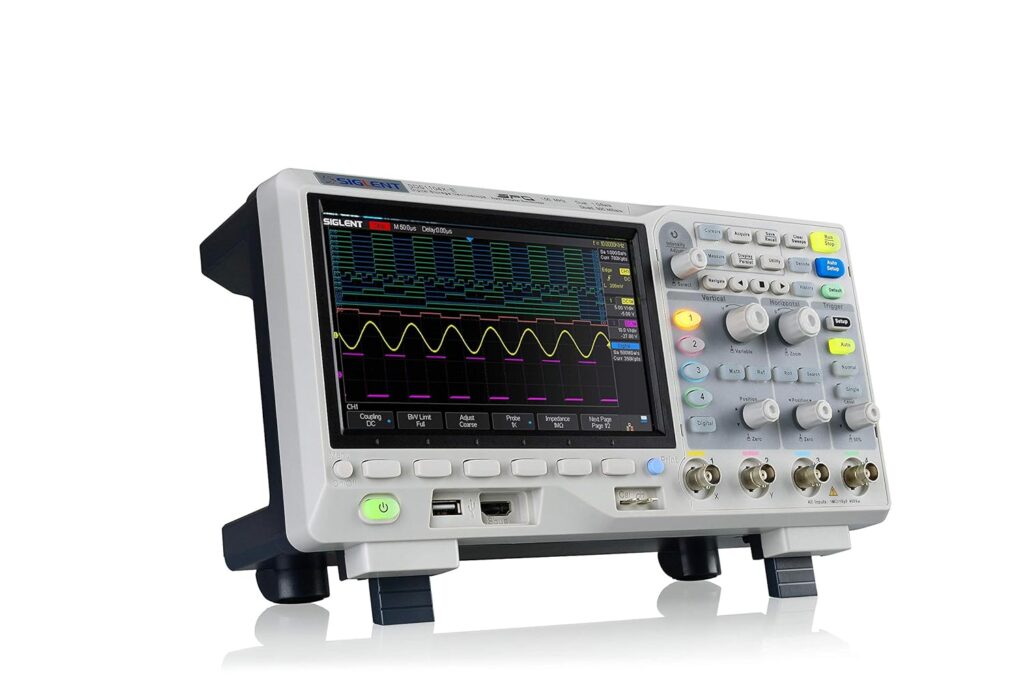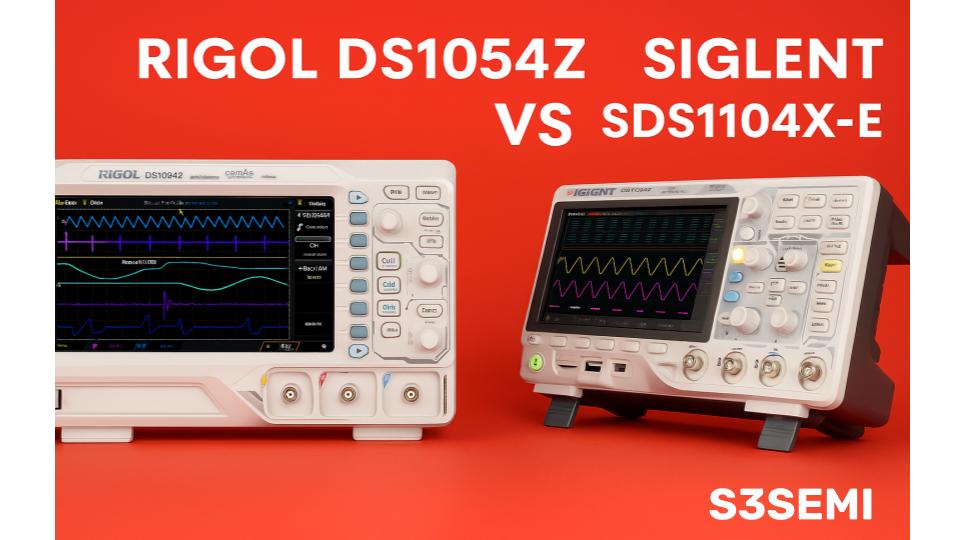
The Rigol DS1054Z has been the “default beginner oscilloscope” for nearly a decade. It’s affordable, hackable, and well-supported by the community. The Siglent SDS1104X-E entered the market later with a more modern architecture, faster update rate, lower noise, and superior UI – quickly becoming the DS1054Z’s biggest threat.
🏷️ Oscilloscope Deals ⭐⭐⭐⭐
If you’re deciding between these two popular entry-level oscilloscopes, this guide breaks down the real differences in performance, signal quality, features, and long-term usability so you can choose the best tool for your workflow.
Overview
Rigol DS1054Z
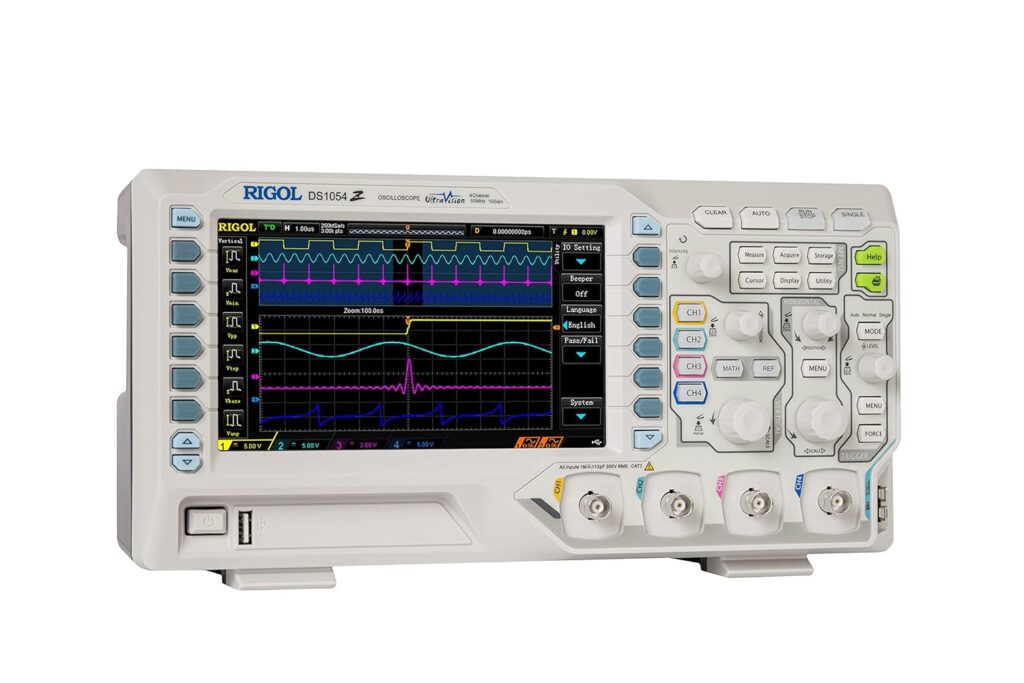
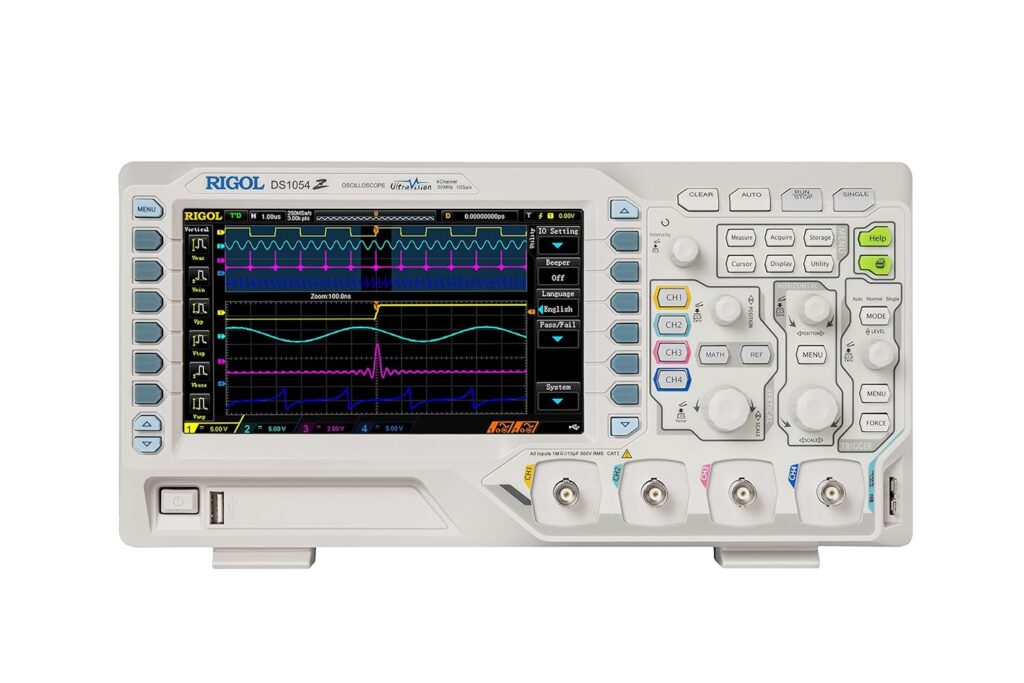
The DS1054Z is legendary in the hobbyist and education space. It offers four channels, deep memory, and a robust feature set for its price – making it the most widely recommended budget scope for nearly 10 years.
Siglent SDS1104X-E
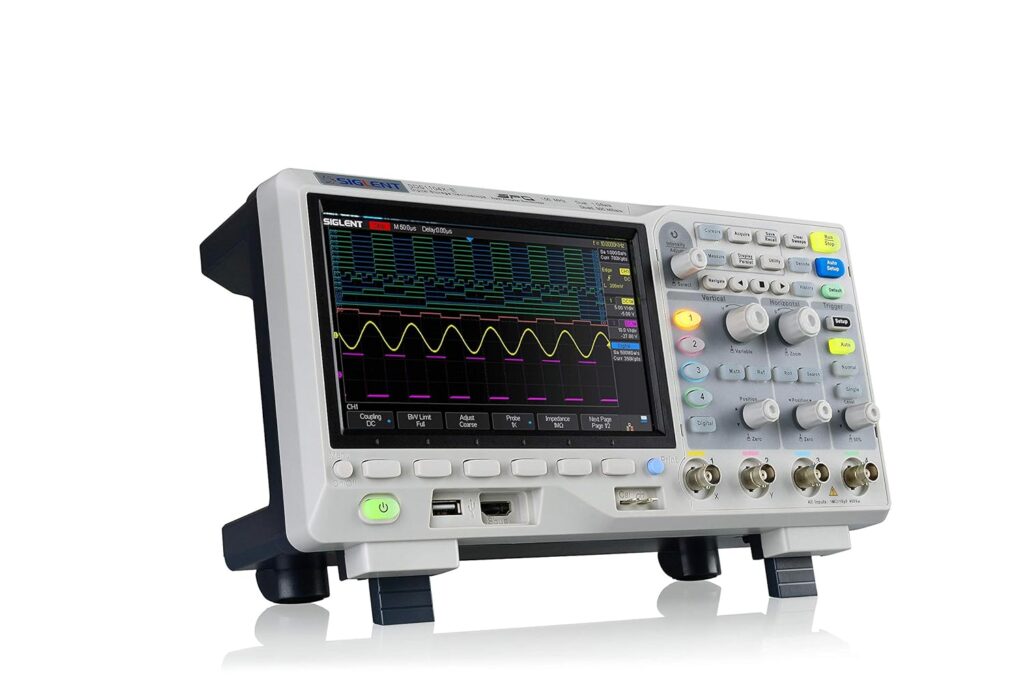
The SDS1104X-E is Siglent’s answer to the DS1054Z – built with newer hardware, a higher waveform update rate, lower noise floor, and better serial decoding performance. Many engineers consider it the “DS1054Z replacement” for modern users.
Specification Comparison
| Feature | Rigol DS1054Z | Siglent SDS1104X-E |
|---|---|---|
| Bandwidth | 50 MHz (100 MHz unlockable) | 100 MHz |
| Channels | 4 | 4 |
| Sample Rate | 1 GSa/s (shared) | 1 GSa/s (per channel pairs) |
| Memory Depth | 12 Mpts | 14 Mpts |
| Waveform Update Rate | ~30,000 wfms/s | ~100,000 wfms/s |
| Serial Decode | Optional | Real-time, high-performance |
| Noise Floor | Moderate | Lower, cleaner signals |
| FFT Performance | Basic | Higher resolution, faster |
| 💳 Pricing | 💲Check Price | 💲Check Price |
Performance and Functionality
Signal Quality
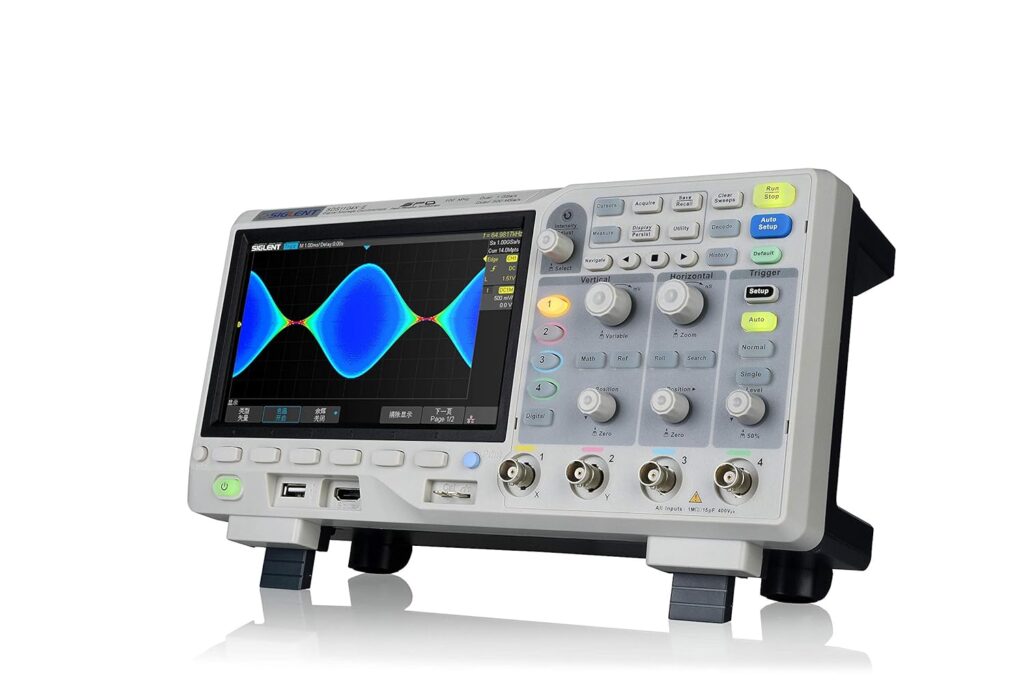
The Siglent SDS1104X-E delivers noticeably cleaner traces thanks to superior ADC hardware and Siglent’s SPO acquisition engine. Small signals are far easier to distinguish than on the DS1054Z.
Triggering and Acquisition
The SDS1104X-E is dramatically faster:
- Rigol DS1054Z: ~30k wfms/s
- Siglent SDS1104X-E: ~100k wfms/s
This allows it to capture rare glitches and transitions the Rigol often misses.
Serial Decoding
Siglent wins decisively:
- Real-time decoding
- More accurate
- Smooth scrolling
- Better handling of long buffers
Rigol’s decoding works but is noticeably slower and more limited.
Usability
The SDS1104X-E feels significantly more modern:
- Faster menu navigation
- Better math processing
- More responsive UI
The DS1054Z UI is still beginner-friendly but dated.
Build and Design
Rigol DS1054Z
- Solid chassis
- Louder cooling fan
- Older-style display
Siglent SDS1104X-E
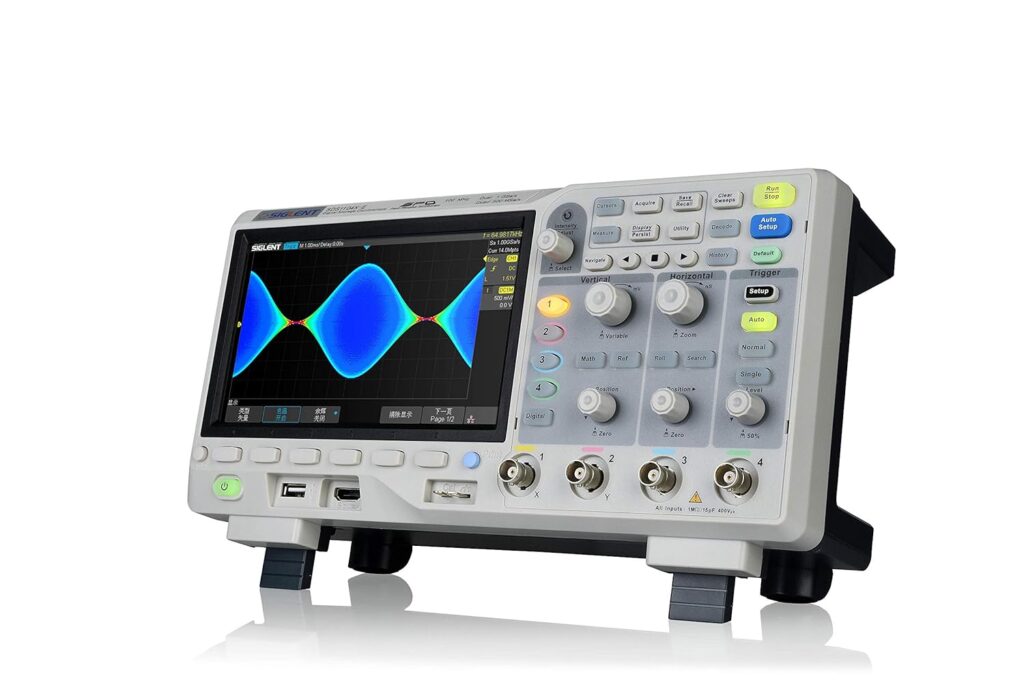
- Quieter operation
- Cleaner display contrast
- Refined ergonomics
Ideal Use Cases
| User Type | Recommended Scope | Why |
|---|---|---|
| Absolute Beginners | Rigol DS1054Z | Easiest learning curve |
| Electronics Hobbyists | Siglent SDS1104X-E | More powerful and modern |
| Students | Rigol DS1054Z | Affordable, great tutorials |
| Professional Engineers | Siglent SDS1104X-E | Faster, cleaner, better decoding |
| Embedded Developers | Siglent SDS1104X-E | Best for serial protocols |
| Basic RF/FFT Users | Siglent SDS1104X-E | Higher-quality math |
Verdict
Both scopes are excellent, but they serve different needs.
Choose Rigol DS1054Z if:
- You want the easiest start
- You want massive community support
- Your budget is tight
Choose Siglent SDS1104X-E if:
- You want the best performance under $500
- You need clean signals and fast decoding
- You want hardware that stays relevant longer
Bottom Line
The DS1054Z is the classic beginner scope.
The SDS1104X-E is the modern performance winner.