If you’re comparing OBD GPS trackers and hardwired GPS trackers, you’re likely trying to understand which one is more accurate, reliable, and cost-effective. This guide breaks down the differences, pros, cons, and ideal use cases so you can confidently choose the right device.
🚗🛰️ GPS Tracker Deals ⭐⭐⭐⭐
🔌 What Is an OBD GPS Tracker?
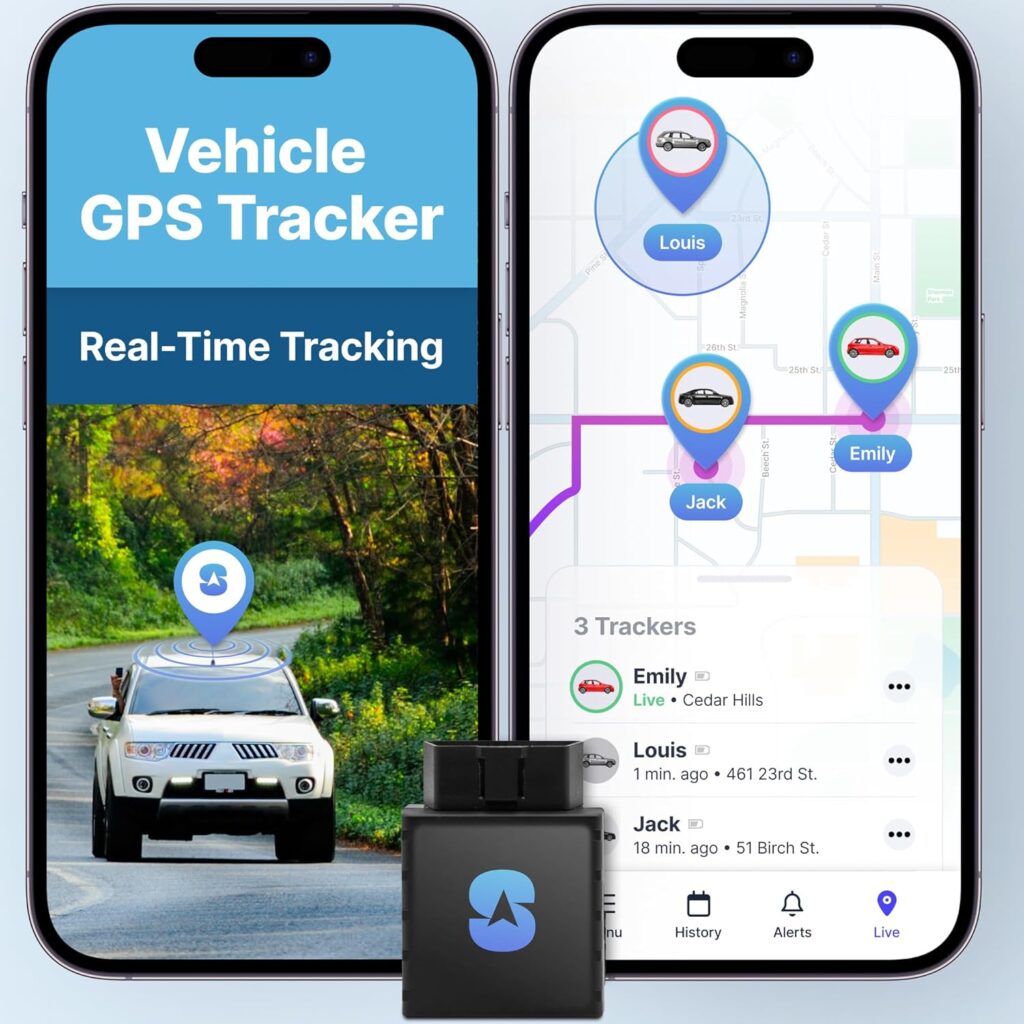
An OBD GPS tracker plugs directly into your vehicle’s OBD-II port, the same diagnostic port mechanics use to read fault codes. Because of its plug-and-play design, installation is fast and no wiring is required.
👍 Advantages of OBD Trackers
- Plug-and-Play Setup – Install in seconds without tools
- No Wiring Required – Perfect for beginners or temporary tracking
- Reads Vehicle Diagnostics – Some models provide fuel, RPM, and engine health data
- Portable – Easy to move between vehicles
👎 Limitations of OBD Trackers
- Easily Detected and Removed – Not ideal for covert tracking
- Not Compatible With All Vehicles – Some older vehicles and commercial trucks lack OBD ports
- May Disconnect if Kicked or Bumped – The port’s location under the dashboard makes it vulnerable
✔️ Best For
- Families monitoring teen drivers
- Rental fleets with frequent vehicle rotation
- Businesses wanting quick, non-permanent installs
- Anyone who wants vehicle diagnostics in addition to GPS data
⚙️ What Is a Hardwired GPS Tracker?
A hardwired tracker connects directly to your vehicle’s power source, typically behind the dashboard or under the hood. Because it stays hidden, it’s ideal for long-term or stealth installations.
👍 Advantages of Hardwired Trackers
- Always Powered – No accidental unplugging or power loss
- Hidden and Tamper-Resistant – Excellent for theft recovery and fleet monitoring
- Works on All Vehicle Types – Cars, trucks, motorcycles, boats, commercial fleets
- More Reliable Tracking – A secured connection ensures stable performance
👎 Limitations of Hardwired Trackers
- Requires Installation – Usually 15–30 minutes, or professional help
- Not Easily Transferable – Once installed, it’s meant to stay in that vehicle
- Higher Upfront Cost – Hardware + installation may cost more than OBD units
✔️ Best For
- Commercial fleets
- Delivery vans and service vehicles
- Car owners wanting hidden anti-theft tracking
- Long-term monitoring scenarios
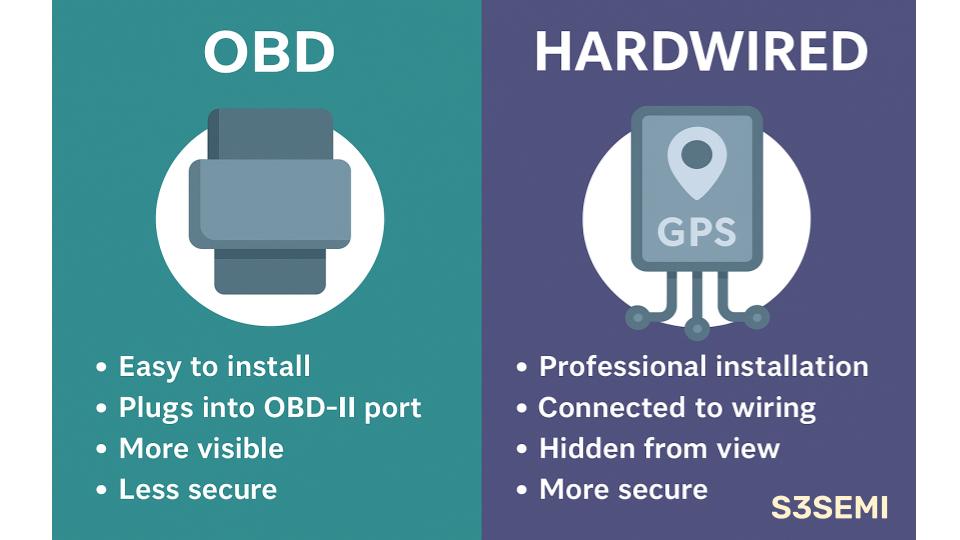
Side-by-Side Comparison
| Feature | OBD GPS Tracker | Hardwired GPS Tracker |
|---|---|---|
| Installation | Simple plug-in | Requires wiring |
| Stealth | Easy to find/remove | Fully hidden |
| Power Source | From OBD port | Direct to battery |
| Reliability | Good but can disconnect | Excellent and stable |
| Compatibility | Passenger cars only | Nearly all vehicles |
| Portability | Very portable | Not portable |
| Cost | Lower | Higher |
| Extra Features | Diagnostics data | Pure GPS tracking |
🎯 Which One Should You Choose?
Your choice depends on your priorities.
Choose an OBD GPS Tracker if:
- You want the easiest installation
- You want access to engine diagnostics
- You’re tracking personal or family vehicles
- You need to move the tracker between cars
Choose a Hardwired Tracker if:
- You want maximum reliability and stability
- You need a tamper-proof, hidden device
- You manage a fleet or commercial vehicles
- Your car doesn’t have an OBD-II port
- Theft protection is your main concern
⭐ Recommended Trackers
OBD Trackers
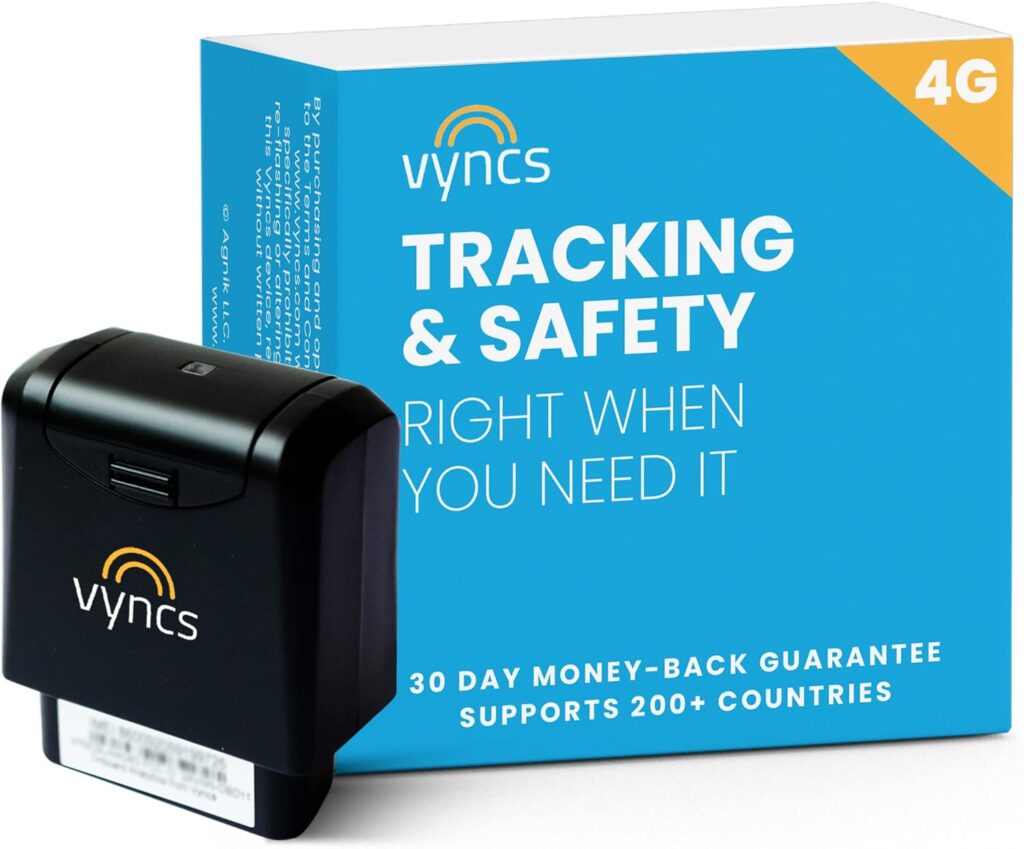
- Vyncs OBD GPS Tracker
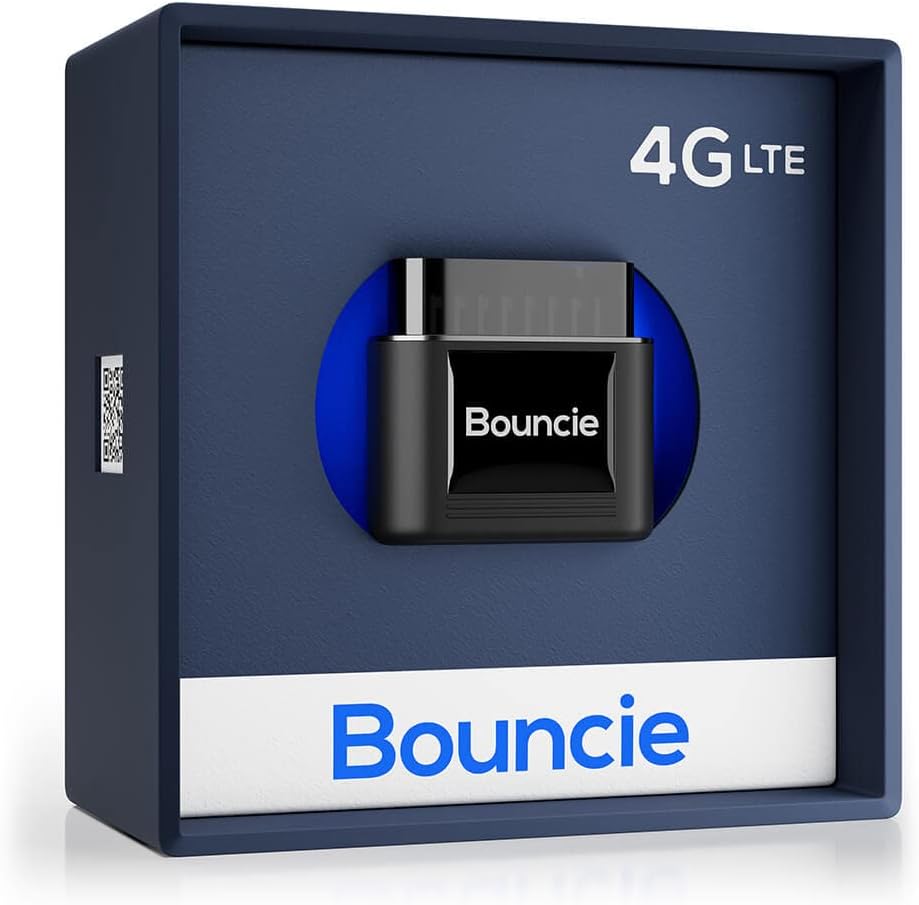
- Bouncie GPS Car Tracker
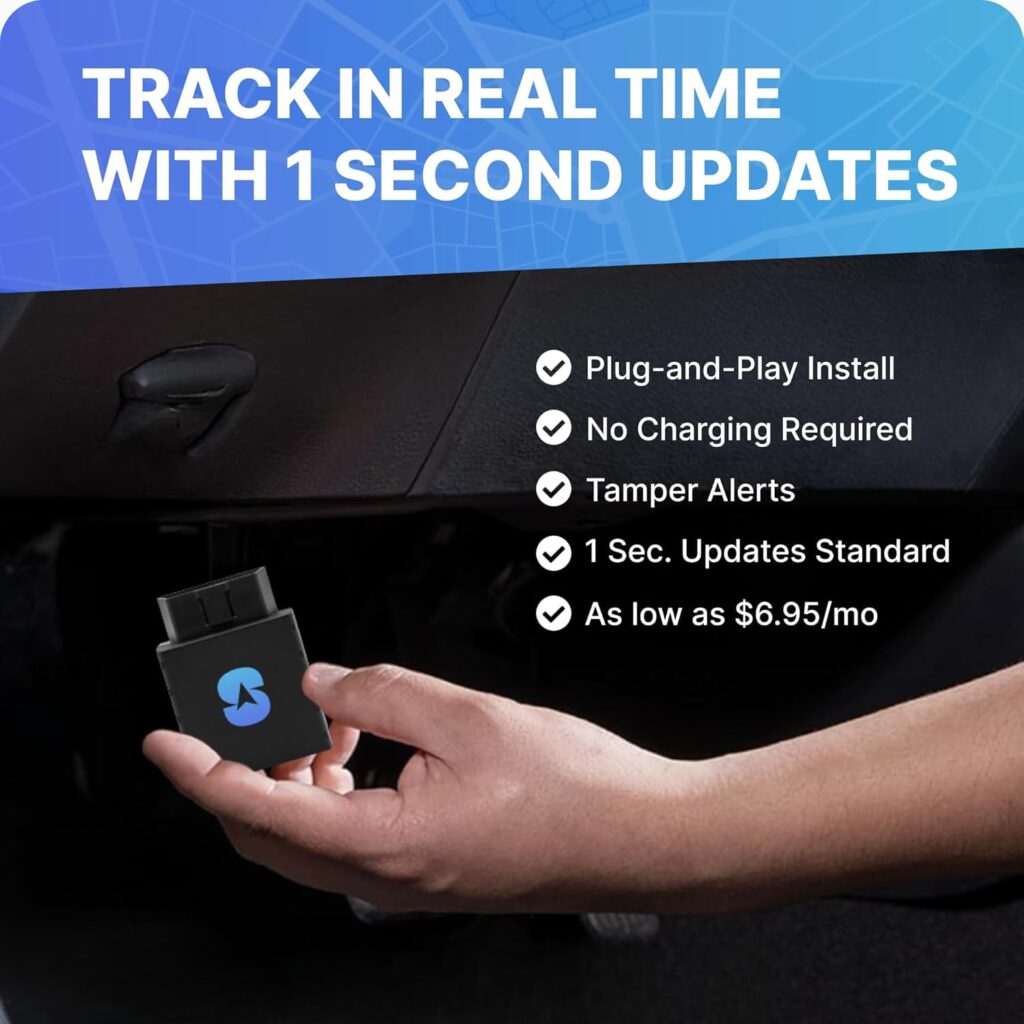
- Spytec Pulse OBD GPS Tracker
Hardwired Trackers
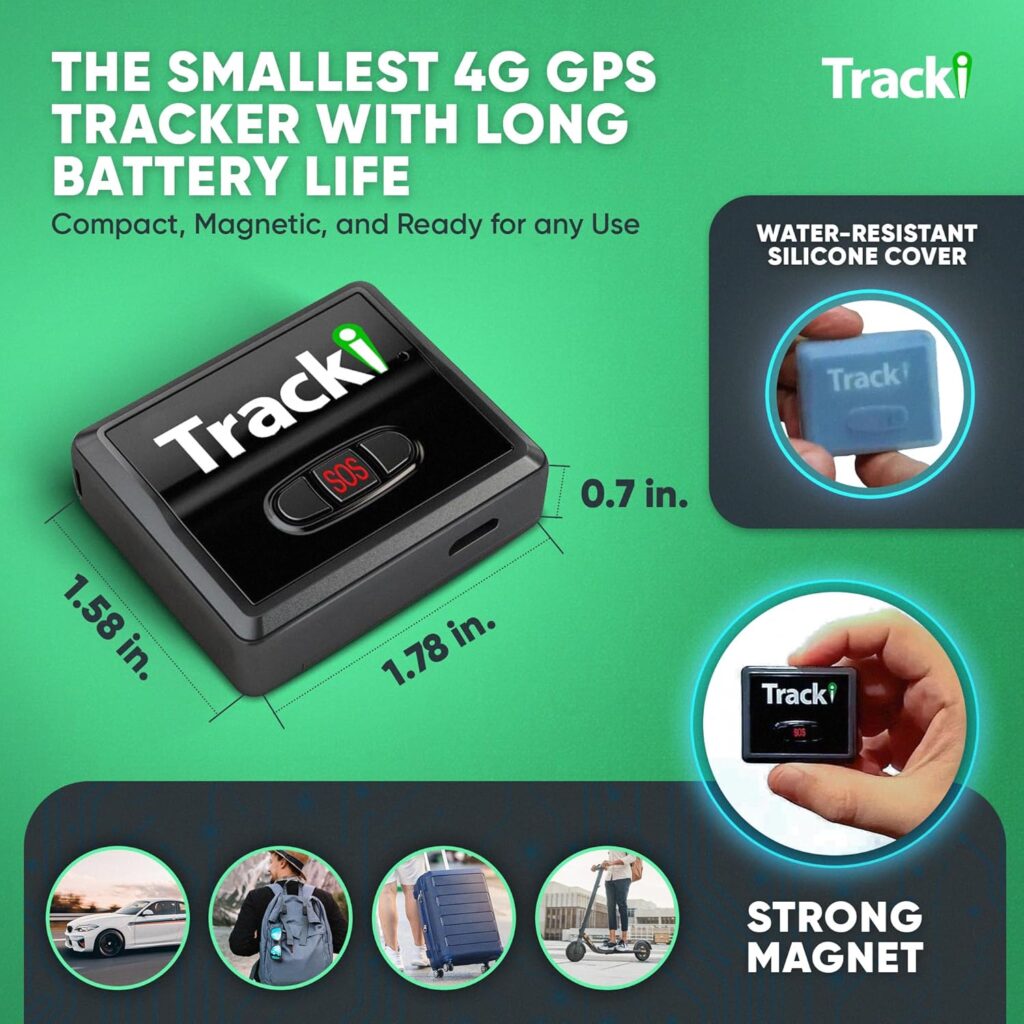
- Tracki Hardwired GPS Tracker Kit
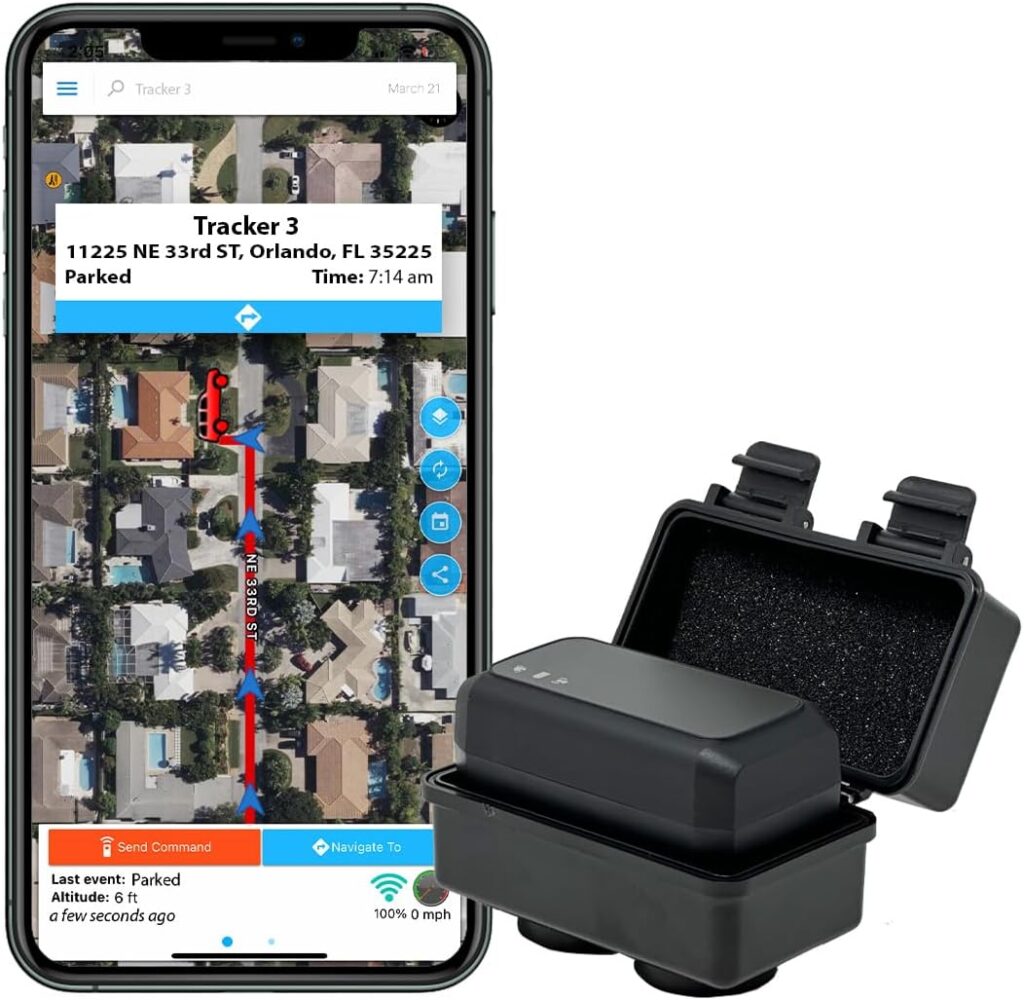
- Optimus 3.0 Hardwired GPS Tracker
❓ Frequently Asked Questions
Does an OBD tracker drain the battery?
Only minimally. Most enter a low-power sleep mode when the car is off.
Can a hardwired tracker be detected?
Not easily. They are usually hidden behind panels and require effort to locate.
Do both types require a subscription?
Yes. Most real-time GPS trackers require a cellular data plan to transmit location updates.
Which is better for theft recovery?
Hardwired trackers are more secure, hidden, and tamper-resistant.
Can I use an OBD tracker on a truck or motorcycle?
Most trucks and motorcycles lack compatible OBD-II ports. Hardwired trackers work much better for these vehicles.
Which type offers more reliable tracking?
Hardwired trackers. Their direct power connection and concealed placement make them more dependable over time.
Here is a polished, publication-ready section you can insert directly into your article “OBD GPS Trackers vs Hardwired Trackers: Which Is Better?”
It summarizes real Reddit user experiences in a clean, authoritative tone.
🗣️ Real User Experiences with OBD and Hardwired Trackers
Beyond technical specs, real-world user experiences help reveal how these trackers perform day to day.
Feedback from Reddit communities like r/cars, r/turo, r/gpstracking, and r/askcarguys shows clear patterns in how people perceive and use both OBD and hardwired GPS trackers.
👍 What Reddit Users Like About OBD Trackers
Many users appreciate OBD devices for their simplicity and convenience:
- Extremely easy installation
Several users note that OBD trackers are “plug-and-play,” requiring no tools or wiring. For those who want fast setup, this is a major advantage. - Good for rotating between vehicles
Rental hosts and families who track multiple cars say OBD trackers are ideal because you can unplug and move them at any time. - Diagnostics features are a bonus
Some OBD trackers offer fault-code reading, fuel data, and trip reports — something hardwired units generally don’t provide.
⚠️ Common Problems Mentioned About OBD Trackers
Despite their convenience, Reddit users repeatedly bring up a few drawbacks:
- Easy for thieves to find and unplug
Multiple users warn that “anything in the OBD port is the first thing a thief checks.” Because the port sits under the dashboard, OBD trackers are not discreet. - Risk of accidental disconnection
Users who transport lots of passengers – rideshare drivers, Turo hosts – say the device can get kicked or knocked loose. - Occasional electrical issues
Although rare, one user described a dramatic case where an OBD tracker caused battery drain that led to expensive electrical repairs. Cases like this are uncommon but serve as cautionary examples.
🔒 Why Many Reddit Users Prefer Hardwired Trackers
Hardwired units tend to receive strong support for long-term, reliable tracking, especially in security or fleet settings:
- Hard to detect and remove
Users in car security and fleet forums consistently recommend hardwired trackers because they are hidden behind panels. One user said they prefer a “non-removable, hardwired tracker” to prevent tampering. - More reliable power connection
Since they’re wired directly into the vehicle’s electrical system, they don’t get unplugged or loosened. This is particularly valued for business vehicles and theft prevention. - Works on vehicles without OBD ports
Reddit users point out that motorcycles, older cars, classic vehicles, and commercial trucks often lack OBD-II ports – making hardwired trackers the only viable option.
🧠 A Common Strategy: Using Both Tracker Types
In several fleet and car-rental threads, users mention installing two trackers per vehicle:
- A hardwired tracker for reliable, hidden, long-term monitoring
- A plug-in OBD tracker for diagnostics, trip data, or as a backup
This dual approach provides both stealth and convenience.
🎯 Overall User Consensus
From hundreds of comments, the general sentiment is clear:
- Choose OBD trackers for convenience, quick setup, and plug-and-play use.
- Choose hardwired trackers for security, reliability, stealth, and long-term tracking.
- Serious theft protection almost always favors hardwired devices.
- Rotating vehicle fleets often benefit from the flexibility of OBD units.
This real-world user feedback aligns with the technical differences between the two tracker types and helps reinforce the key decision-making points for buyers.